7 Things I Love about the United States of America on #4thofJuly #USA


1. America is Enlightened

I am proud of the fact that America is the first country that was founded on the principles of Liberty, Fraternity, and Equality that were the product of the Enlightenment. Yes there were some who came to this continent for religious reasons, but the country’s foundation is firmly within the humanistic tradition. The phrase “we hold these truths to be self-evident” was originally supposed to be “we hold these truths to be sacred” but Benjamin Franklin argued for the “self-evident” wording so as to have the Declaration of Independence appeal to EVERYONE, and not just those who believed in a particular religion, or indeed any religion at all.

2. America is Optimistic

Stephen Fry, like Alistair Cooke before him in a different generation, is someone born in Britain who considers America to be his adopted home. One of the reasons why he feels pride in America is that it the national character is so optimistic. He mentions a theory that most Americans are optimistic because it is the optimistic ones that ended up leaving Europe when times got tough, whereas the pessimistic or fatalistic ones ended up staying there. When I heard him mention this theory on an interview with Craig Ferguson on the Late Late Show (see clip below), I realized that his theory actually has some scientific basis as it was mentioned in the book Genome: The Autobiography of a Species in 23 Chapters by Matt Ridley. The genetic structure of members of families was compared for those families who had several generations move to America at some point in their history. The ones that were on the American side had higher incidence markers for what might be referred to as the genes controlling “restlessness”, better known as Attention Deficit Disorder.

Here’s the link to the interview:

http://www.youtube.com/watch?v=SWDzfkWDClk

3. America is Innovative

One of my favorite founding fathers is Benjamin Franklin. I just got done reading the biography of Benjamin Franklin by Walter Isaacson. I think it interesting that he has also produced biographies on a scientist (Albert Einstein), a diplomat (Henry Kissinger), and an inventor (Steve Jobs), whereas Benjamin Franklin was all of those in his lifetime, and more. Benjamin Franklin was not only innovative when it comes to scientific ideas or inventions, but also in terms of social norms as well. He along with George Washington had contemplated the idea of the American Indians joining the United States as a separate state of their own. When he saw a group of African-American children who were educated to be literate in Massachusetts, he became even more anti-slavery than he was before. He probably would have been one of the Founding Fathers who would have been most at home in our technological age of wonders such as the Internet.

4. America is Multicultural and increasingly Multiracial

One of my favorite places to live was on Roosevelt Island in New York, because many of the UN diplomats had residence there. But Roosevelt Island was different from New York in terms of being multicultural and multiracial in terms of degree. The rest of the city is almost like a reflection of the microcosm of the UN, and America as a whole is looking increasing like this as well. For someone who loves foreign languages and learning about the different cultures of the world, this is not threatening, but exhilarating to know that we are made up of the same fabric as the rest of the planet.

To some having the white people lose their “pride of place” in being the most numerous in this country is threatening, but the America I love is the one, like the Statue of Liberty, who welcomes the newcomers.  It’s not a zero-sum game, and the immigrant experience teaching us this time and time again.

5. America is Equal

When I say “equal”, I mean “equal under the law.”  This is the essence of the breakdown of feudalism with its inherent caste system towards a truly democratic society. The worst aspect of the financial crisis of 2008 in my estimation is not the economic inequality it engendered, but the fact that nobody in Wall Street has been prosecuted for fraud, thus giving credence to the idea that there is a separate justice for the elite in this country. Even during the administration of Ronald Reagan, hardly an anti-business president by any means, those who were involved in the Savings and Loan scandal went to jail.  But not this time around.  That is why I see those in Occupy Wall Street as being conservatives in their own way because they want to restore this country to a time and place when committing a crime meant you did time, no matter who you were.

6. America is Federal

The system of concentric government, from the Federal to the State to the Municipal level is an ingenious system, and the contrasts and conflicts between Federal and State governmental powers has a long-running history in our country. From a cultural standpoint, however, I must say that America is so vast that it contains multitudes to borrow the phrase from Walt Whitman. You have so many regional cultures that have their own charm and yet all of us have multiple identities as Californians (or whatever state you’re from) and Americans. This allows us to share a common culture and yet not be homogeneous.

7. America is Progressive

There are some things worth conserving and I have some sense of sympathy for conservatives who want to put the brakes on change out of a sense of caution and a fear of anarchy. However, I do have to say that, as Winston Churchill put it, “Americans can always be counted on to do the right thing…after they have exhausted all other possibilities.” We were the second to the last country in the world to get rid of slavery, but we did finally do it (the last was Turkey, I believe).

The excesses of economic inequality led to periods of reform in which laws and regulations controlling the power of business were enacted. The Progressive movement in this country occurred after the excesses of the Gilded Age in the 19th century, and if history serves as a guide, it will create a backlash against the second Gilded Age in which we are living now.

These are the reasons for which I am grateful to be an American. Many of the things I mentioned now are under threat in this country, such as the American optimism I mention in point number 2.

But if we celebrate the things we love above our country, we will be in a more positive frame of mind to tackle those problems that we do face.    Our country has its faults, but it is lovable despite all its faults for the 7 reasons I mentioned above.

Happy 4th of July!

Passing the #PMP Exam—Study Group Discussions (Chapter 1—What is a Project?)


In this blog post, I discuss the topics that need to be paid particular attention to when studying the PMBOK® Guide Chapter 1—Introduction.  The three topics to be discussed in this and the next few posts are taken from the discussions we had in our PMP exam study group after completing the exam prep course put on by the Orange County Chapter of the Project Management Institute or PMI.

1. Distinction between project and operational work

You wouldn’t think that something as simple as “what is a project?” would cause trouble.   But some exam questions have been known to trip up people on this supposedly simple concept.   Why?  The problem comes from the fact that what is often called a “project” in the real world does not fit the definition of a “project” according to the PMBOK® Guide, but is rather what would be referred to as “operational work” or “ongoing work”.

Here’s the official definition of a “project” according to the 4th edition of the PMBOK® Guide:

Project: A temporary endeavor undertaken to create a unique product, service, or result.

So a project and operational work are different in this respect:

Duration Result
Project Temporary (starts and ends) Unique product, service, or result
Operational Work Ongoing and/or repetitive Mass production (for example), repetitive work

2. Similarity between project and operational work

The famous cycle of “plan, do, check, act” applies to BOTH project and operational work.

In the world of project management, “plan” is covered by the Planning process group, “do” by the Executing process Group, “check and act” are covered by the Monitor & Control process Group.


To these a project adds to the mix a “start” or Initiating Process Group, and an “end” or Closing Process Group.

3. Why is this distinction and similarity important?

Some exam questions will ask you about a company that decides to treat ongoing or operational work as a “project”. It may give you a scenario and ask you what happens next.

The key here is that many of these questions will put the word “project” in quotes. This should be seen as a signal that “the company SAYS it’s a project, but is it really?”

Scenario:

Here’s an example from a previous company of mine, an insurance company.  Every year towards the end of the fiscal year, all of the outstanding claims had to have reserves that were not too small, and not too large, but just right. The purpose of confirming that the reserves were in this Goldilocks zone was to prepare for any potential audit and demonstrate that we were not under-reserving (and thus going against insurance regulations) or over-reserving (and thus going against tax regulations).

Question:

In our company, we referred to this annual confirmation of the reserve calculations as “the reserve project.” It had a beginning and an end, and it produced a result (regulatory compliance). Was it really a project according to the PMBOK® Guide?

Answer:

No, because it is not a “unique” product, but one that was repeated from year to year. This is important because there was planning as a part of our “reserve project”, but there was no need for, say, a project charter or some of the other essential elements of project management.

CONCLUSION:

The distinction between a project and operational work has ramifications for the way a project is managed within an organization, and also for risk management. Projects, given their nature as producing “unique” or sometimes even brand new products, are inherent more risky than the tried-and-true operational work. That makes them not just different in degree from operational work (adding two additional process groups of Initiating and Closing), but also in kind as well.

Some exam questions recognize that the “real world” terminology with respect to the question “what is a project” is not PMBOK® standard terminology, and try to test to see if you know this difference.

Know it and pass the test!

In the next post after the 4th of July holiday, I will discuss the next subject that needs some attention from Chapter 1: the distinction between a project, program, and portfolio.

Passing the #PMP Exam—Study Group Discussions (introduction)


1. Introduction

In May and June 2012, I attended a class put on by the Project Management Institute or PMI’s Orange County chapter that was designed to prepare its members to pass the test for certification as a Project Management Professional or PMP. It was an intensive, all-day class held on Saturdays and it just recently completed.

During that class, I organized a study group and we discussed each chapter of the Project Management Body of Knowledge or PMBOK® Guide before each weekend of instruction.   The entire class had a study guide called

Achieve PMP Exam Success by Margaret Chu, Diane Altwies, and Janice Preston.

which we used in class to collectively go over the end-of-chapter review questions.  Based on recommendations from those that took the class before and passed the exam, our study group got a more substantial exam guide,

PMP Exam Prep, Seventh Edition: Rita’s Course in a Book for Passing the PMP Exam by Rita Mulcahy.

Other study groups used different books, such as the guide by Kim Heldman or Andy Crowe, but our group just decided to use the Rita Mulcahy book as a supplemental resource based on the personal recommendations we received.

Now the class is over with but people in our study group are now doing a review of the material we covered in class in preparation for taking the actual test. I am happy to say that one of our study group members, Peter, already passed the exam and is now officially a Project Management Professional or PMP!

That is a tremendous encouragement to the rest of us in the study group.  I’m hearing reports back from one or two members of other study groups that they have passed the test as well.

2. Purpose

The purpose of these blog posts is to uncover those subjects we covered during the course of our review which we felt needed more attention paid to them because they were either very complicated or we were getting a lot of practice questions wrong in our end-of-chapter reviews.

NOTE: For tips on HOW to study for the PMP exam, see my blog post

https://4squareviews.com/2012/06/19/7-helpful-tips-for-successfully-passing-the-pmp-exam/

These posts will go over the details of certain concepts presented from the PMBOK® Guide chapters 1-3, Overview, Framework, and Processes, and then the concepts that come from the various knowledge areas presented in chapters 4-12 (Integration, Scope, Time, Cost, Quality, Human Resources, Communications, Risk, Procurement).  There will be a separate discussion of the Professional Responsibility or ethics guidelines recommended by the PMI that is not contained in the PMBOK® Guide itself.

The next blog posts will cover the following topics from Chapter 1—Introduction:

  • Distinction between project and operational work
  • Distinction between project, program, and portfolio
  • Function of a Project Management Office

These posts will not cover EVERYTHING that it is in Chapter 1; however, they cover those topics which caused many of us to miss practice exam questions the first time around and therefore warrant a bit more close attention.

@BillPhillips and the #Transformation Program—Introduction


Are you ready to begin your very own transformation journey to a healthier, happier life?

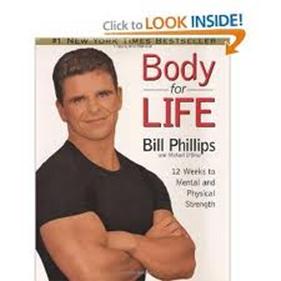
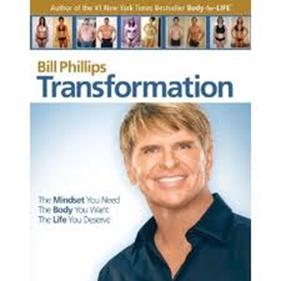
This fundamental question is at the end of the introductory chapter of Bill Philips’ book Transformation, whose subtitle is The Mindset You Need, The Body You Want, The Life you Deserve.

The answer to the question “do you want to begin your very own transformation?” is probably “yes.” But to answer the question “are you ready to begin your very own transformation” with a yes, I wanted to give some helpful tips on how to succeed with the Transformation program.

1. Background—Bill Phillips

Bill Phillips was born and raised in Colorado. He tried for a career in bodybuilding in Southern California in the mid-1980s, but returned to Colorado to study exercise physiology and sports nutrition at the University of Denver.

After a career in publishing magazines geared towards bodybuilders and in marketing meal replacement supplements (protein powder nutrition shakes), he went on in 1999 to publish the book Body for Life which sold over 3.5 million copies. The basic formula for the program is a 6 X 6 program of nutrition and exercise.

Exercise—6 days of exercise per week, 20 minutes a day, with three days consisting of cardio exercise and the other three days consisting of strength resistance training (weightlifting).

Nutrition—6 meals a day consisting of breakfast, midmeal #1, lunch, midmeal #2, dinner, and dessert. The two midmeals should ideally consist of a nutrition shake or some sort of light snack that contains protein.

The basic idea is that by eating more meals that contain smaller portions than the regular-sized meals people are accustomed to, not just the number of calories but how they are burned throughout the day will be affected. And the same goes for the exercise: by focusing on high-intensity intervals during the cardio training and even the weightlifting exercises, your calories will be burned throughout the day more effectively.

Now flash forward to June 2010. Bill Phillips creates a new version of his fitness and nutrition program with Transformation. It is the Body for Life program updated through research and backed up with the power of social media through Facebook and the online Transformation.com fitness community.


2. Background–Myself

I went on the Transformation last year and lost 5% body fat, starting from 30% and ending at 25%. But the physical transformation aside, I had a lot more energy and a lot more confidence that I could tackle ANY difficult project.

This summer I decided that I want to go through that Transformation process again and see if I can bring my body weight even closer to its ideal. So I’ve decided to start the program this 1st week in July and continue it for 18 weeks. Each week starting from next Sunday will cover a single chapter in the Transformation book.

I know the program worked before, and I know it will work again—but only if I work it!

3. Tips for Success

Here’s what you need to prepare in order to do the Transformation correctly.

First, you need to sign up for the Transformation program at Transformation.com.

This is free. This will get you access to

  • online journal where you will do the exercises after reading each chapter,
  • online blogs where you can write about project
  • online forum where you can answers to your questions about fitness or answer questions from others
  • motivational videos, etc.

Second, you need to get some sort of notebook to take with you to the gym to write down the exercises you plan on doing and to record the actual results. Another alternative is to purchase an app for your smartphone such as GymGoal that will do the same thing.

Third, you must have proper gym equipment (shoes, workout clothes) etc. for the exercise portion of your program.

That’s for the program in general. Once you have all that in place, here’s an example of my checklist for each week of the program.

No.

Task.

Done?

1. Read Transformation chapter
2. Print out nutrition, exercise worksheets
3. Fill in online journal with Transformation Challenge exercise
4. Make meal plan for the week, go grocery shopping according to plan
5. Fill out exercise worksheets with planned exercises
6. Fill out nutrition worksheets with planned meals
7. Fill out exercise notebook (or GymGoal app) with planned exercises
8. Fill in online blog with goals for the week
9. Exercise at gym (3x cardio, 3x strength training)
10. Fill out exercise notebook (or GymGoal app) with exercise results
11. Transfer exercise results to exercise worksheets
12. Fill in nutrition worksheets with actual meals eaten
13. Fill in online blog with accomplishments for week
14. Respond to messages on Transformation.com (if any)

Now this seems like a lot of paperwork, but it’s important to track your progress so you can see if you are improving, and sometimes to see early warnings when you need to pay attention to a certain part of the program.

4. FAQs

How is the Body for Life program different than the Transformation program?

The Body for Life was originally a 12-week program; the Transformation program is an 18-week program. Body for Life contains an exercise and fitness program for the 12 weeks, Transformation adds a thematic element where you do journal work to examine 18 issues ranging from physical to psychological to spiritual that may be at the root cause for the weight gain in the first place. Plus Transformation adds a “Fitness Facebook” element of adding a support group through the vehicle of social media.

Some reviews of the Transformation.com book comment on the “vagueness” of some of those concepts in the 18-week program. How can “forgiveness” be related to weight loss?

The Transformation book is taking the core program of Body for Life and bringing it to another level by being holistic, that is showing that the body, mind, psyche, and spirit are intertwined, and what affects one may affect the others. Your weight gain may be for totally physiological results, but for most people, there are other issues involved that contributed to the weight gain or are preventing you from losing that weight. These deep-seated problems are the ones that Bill is trying to get at in his program.

What is the key to Transformation program success?
Preparation, documentation, and follow through with others in a fitness community. This could either be people you meet through Transformation.com or a real fitness group such as Meetup group or other people who go to your gym.

Next week on Sunday, I will go through chapter 1 of the Transformation program and continue for the next 17 Sundays after that until I finish the program. If anyone who reads this has any questions, please leave them in the comment section.

Cool Spring—The #ArabSpring revisited (post-webinar Q&A session) #EIU


The following are my notes from the Q&A session immediately following the webinar that was presented by Robert Powell, Senior Analyst, Middle East of the Economist Intelligence Unit on June 29, 2012. The questions were put forward by those in the audience listening to the webinar and were answered by Robert Powell.

1. What lessons can Egypt provide for Libya with regard to drafting of constitution and rise of Muslim Brotherhood?

With regard to the drafting of the constitution, the process to put in a President and a Parliament in place before the drafting of a new constitution was always a problematic one. Libya should negotiate their new constitution before any elections are held.

With regard to the Muslim Brotherhood, it was always going to do well in the Middle East and North Africa (MENA) countries, because it’s a mature political party, and what’s more it is relatively moderate. What Libya has to be concerned about is the influence of the radically fundamentalist Salafis, who are being supported by money from Saudi Arabia.

Libya is in a better position than Egypt for two reasons: there is no overweening military, because Muammar Gaddafi was paranoid enough of a military coup not to allow a strong military to develop. However, there are a lot of internal spies and the political situation is more unstable in the long run precisely because you do not have any overweening military or other political parties. Therefore the situation needs to be monitored carefully, although it is not garnering as much attention from the world press as Egypt has been doing recently.

The second reason it is in a better position is because it has plenty of oil money, due to the rise in oil prices. It will be important for the government to provide fiscal stimulus to the economy.

2. Is a second Tahrir Square type of Egyptian revolution probable?
Please remember that neither of the two largest political blocs in Egypt at the moment, the Muslim Brotherhood nor SCAF, truly represent the core of the revolutionary movement in Egypt.

At this point according to opinion surveys 90% of Egyptian population just want to go back to their normal life; their livelihoods have been severely impacted by the revolution. They want a greater say so, but a new revolution is unlikely because of fatigue.  There will be sporadic protests, especially if SCAF tries to make too much of a power grab during negotiations with President Mohammad Mursi about the constitution.

During the negotiations, the Muslim Brotherhood will lead for the time being. It will comprise the majority of the elected parliament. SCAF will carve out a certain independence over its own affairs, i.e., foreign relations, but even more importantly for them, their real estate and commercial interests.

For a historical parallel, look at the evolution of relations between Erdogan, Turkey’s powerful prime minister since 2003, and the military there. There has been a rapprochement that could be replicated in Egypt as well.

3. How does Obama administration use of Unmanned Aerial Vehicles or drones challenge the struggles of the Yemen government against Al-Qaeda?

First, let’s review the political situation facing the current Yemeni government. Right now, the coalition in the government is made up of 50% of the former ruling party, and 50% of the opposition.

The former Vice President, Abd Rabbuh Mansur al-Hadi, is now the current president and seems to be proving out to be a capable and assertive leader. The problem is that, although the former President Saleh has been ousted from power, his relatives still have positions of power.

The US says they will impose sanctions on the Saleh family if they try to hold on to power behind the scenes. This move may be helpful politically in Yemen to prevent the fragile coalition from unraveling.

However, the situation with drones, as the question implied, is that any tactical military advantage that it gives to the Yemeni government vis-à-vis al-Qaeda may be overshadowed by the strategic difficulties it creates in destabilizing the country politically.

There are echoes of the situation in Pakistan with regards to the use of drones. Neither the Yeminis nor the Americans want “boots on the ground”. The drones are seen by the government as giving support to the Yemeni army, which IS on the ground. However, they are extremely unpopular with the people because of what is euphemistically referred to as “collateral damage”.

At least on the economic front, aid is coming in from Saudi Arabia, and the government needs to more fiscal stimulus in order to be seen to be helping the Yemeni populace.

4. Are radical forces in Yemen such as al-Qaeda undermining Saudi plans for greater control of the region?

Al-Qaeda in the Arabian peninsula is based in Yemen; its members are an amalgamation of Saudis and Yemenis. There have been several attacks launched on Saudi soil in the past that have failed. Saudis are actually more concerned about political destabilization in their own county from Shi’ite groups to the East, in particular in connection with their regional arch-rival Iran.

There is a Muslim Brotherhood in Yemen but it doesn’t have any interest in Saudi affairs. In reality, Yemen is unlikely to have an internal political impact on Saudi outside of security concerns connected with al-Qaeda and other radical groups.

5. By your own figures in the webinar, the “revolutionary” Arab Spring countries are doing poorly economically, and the ones that are “counter-revolutionary” such as Saudi Arabia are experiencing an economic boom. Could one argue that Saudi Arabia and the UAE are serving their people better as autocracies than the countries with inefficient democracies?

This is a philosophical question which we could discuss for hours, but my own opinion is that, even though it looks like the counter-revolutionary countries are better off economically in the short run, in the long run they are not.

In the long run democracies deliver prosperity to their people far better because of the more equal distribution of income. Let’s put it another way: Saudi Arabia and the UAE could have done much better with the resources with which they have been placed.

If Saudi Arabia had become a democracy, it would now be the richest country in the world.

Cool Spring—The #ArabSpring revisited (Economist Intelligence Unit webinar) #EIU


The following are my notes from the webinar that was presented by Robert Powell, Senior Analyst, Middle East of the Economist Intelligence Unit on June 29, 2012.

All modern revolutions have ended in a reinforcement of the state… Albert Camus

1. Arab Spring—overview

In the past 18 months, there have been some positive developments, such as the 4 leaders ousted in Tunisia, Libya, Egypt, and Yemen, with relatively free-and-fair elections held in those countries. Some other countries experienced political reforms, such as a new constitution in Morocco, a freer press in Algeria, and the parliament in Oman being given limited legislative power.

However, on the negative side of the ledger, the domino effect has stalled, with the effort to unseat Assad in Syria being stalled and devolving into a civil war. In those countries that experienced a revolution, there was economic disruption and a drying up of capital inflows. Those that did not experience any sort of revolution, like Saudi Arabia, however, came off unscathed, and in fact have experienced an economic boom to the rise in oil prices.

Fig. 1. Mixed results for the “Arab Spring”

2. Arab Spring—Political/Economic Outlook in “Arab Spring” countries

Here’s a country-by-country look at the political and economic situation in the countries of the Middle East and North Africa that have experienced a successful (Tunisia, Libya, Yemen, Egypt) or an abortive revolution (Syria). In the following chart, “MB” stands for “Muslim Brotherhood”.

The color code for the boxes is: green means improving situation, yellow means neutral or stagnant situation, and red means a worsening situation. They are listed from best to worst in terms of medium-term outlook.

Fig. 2 Political/Economic Outlook in Arab Spring Countries

Country

Political

Economic

1. Tunisia MB clear winner; constitution referendum delayed, but progressing Exports and tourism improving, but slowly due to Euro Zone
2. Libya Parliamentary elections in a few months; MB will do well Oil production back to pre-revolution levels
3. Yemen New president proving assertive Oil production ½ of pre-revolution levels
4. Egypt MB (Moursi) did well in elections, but has to share power with SCAF;
Constitutional draft process is key
Economy in trouble; IMF funding needs to be replaced
5. Syria Slipping into civil war; Turkey pushes back on refugees due to downed plane incident Regime finances crumbling

3. Arab Spring—Political outlook in “onlooker countries

For those countries which did not experience revolution, here are some trends that have obviously been sparked by the “Arab Spring.”

Lower-level protests and promises of constitutional change occurred in Algeria, Jordan, Morocco, Oman, Bahrain. Here is the short-term tendency of political reform in these countries, with green means improving situation, yellow means neutral or stagnant situation, and red means a worsening situation.

Fig. 3. Political Outlook in non-Arab Spring Countries

Country

Political Reform

1. Morocco Reforms went farthest
2. Oman Some parliamentary power gained
3. Algeria Unpredictable
4. Jordan Political situation very shaky
5. Bahrain Saudi Arabia helped squash revolution

Note:     There was not a lot of specific information in the presentation regarding these countries compared to the Arab Spring countries in Fig. 2.

Saudi Arabia is a special case; although the short-term prospects of political reform are non-existent, there is a potential for medium-term change when the oldest members of the ruling family pass away and there is a succession to new crown princes.

3. Economic Output in Middle East and North Africa countries

Here is a chart of real GDP growth in 2006-2010 or “pre-Arab Spring” and 2011-2012 or “post-Arab Spring”

Fig. 4 GDP Growth Before Arab Spring and After Arab Spring (UPDATED)

Country

GDP Growth

2006-2010

GDP Growth

2011-2012

Egypt

6.2%

1.7%

Tunisia

4.6%

0.6%

Yemen

4.0%

-6.9%

Syria

4.9%

-5.8%

Libya

3.2%

0.5%

Saudi Arabia

2.8%

6.0%

UAE

3.2%

3.4%

Those countries whose economies have improved after the Arab Spring have figures in the second column that are green, and those whose economies have deteriorated have figures in red. 

You can see that Saudi Arabia has done particularly well in the region due to the rising oil prices.

4. Forecast for Political/Economic Reform

The forecast for the future of political and economic reforms has changed from the original presentation made on the Arab Spring back in April due to the present. Here are the three probabilities assigned to the neutral, pessimistic, and optimistic forecasts for the region.

Fig. 5. Economist Intelligence Unit Forecast for Political Reform in MENA

(last year’s forecast compared to this year’s forecast)

Forecast Type Forecast Title Forecast Explanation 2011 2012
Neutral K Democracy (in name only) Reforms results in creation of democratic structure, but w/o genuine accountability 60% 60%
Pessimistic L Authoritarian rule Efforts to build democratic institutions derailed 20% 30%
Optimistic J Democracy (in reality) Representative democracy takes root in region, leading to genuine popular participation in govt 20% 10%

J

You can see that the possibility of a negative outcome has increased from 20% to 30% and the probability of a positive outcome has decreased from 20% to 10%.

5. Conclusion

Robert Powell concluded by saying that, despite the setbacks, the Middle East has changed, but there is a growing risk that democratic change may be checked or even reversed.

He feels that significant long-term economic growth will occur only if democracy takes root. Despite the short-term wealth of Saudi Arabia, a regime’s longevity should not be confused with its stability.

The revolutionary movement in the region has a legitimacy with the common people that will endure.

Tomorrow I will present the question and answer session to this talk that came after the main session presented above.

History of the Modern Middle East–Lecture 4: The Military-Industrial Complex of the West vs. the Military-Commercial Complex of the Islamic World (part 7)


The original title of Prof. Richard Bulliet’s lecture given on January 29, 2009 at Columbia University lecture is “Inequality” vs. “Difference”; he prefers the term “difference” to that of “inequality”.  In this final post of the series, he concludes his lecture by discussing the religious elite and their relationship to the military elite in the Middle East, how the European tradition of primogeniture differs from the traditions of the Middle East, and finally how climactic and technological factors have helped shape the differences between society in Euroamerica and that of the Islamic world.  

16. The Relationship between the Religious Elite and the Military Elite

When you get into the religious elite, you find that the religious elite is to some degree connected with the government, but is in a very large sense independent. It has its own independent economic base as would churches in Europe has.

However, there is almost a complete disconnect between the religious elite and the military. In other words, you have the notion of primogeniture in Europe for a long time among certain aristocratic families in Europe for a long time, that is, the first son is the one who has the land, and the second goes into the church or what have you. This notion means that the same families produce elites in the diplomatic corps, in the army, in the church, in the rural control of land, and in authority; that sort of complex family you don’t really have in the Middle East. Instead you have a more narrowly tracked set of career paths. Prof. Bulliet will spell out more on this topic in a later lecture.

With regards to this one particular difference, is it a matter of inequality (between Euroamerica and the Middle East)? No, it’s a matter of difference. There is nothing particularly great about hereditary aristocracy, and the idea that in Europe leaders were expected to have as their primary skill acquired during their upbringing the talent and the will to get in somebody’s face and smash it in with an axe. It’s not appealing; it’s basically having the ruling system predicated on serial murder, whereas the idea that your leadership comes from the group that would ultimately rather sell chicken is not necessarily bad (laughter). But it’s different. Now if you looked at Russia, you would find that the nature of the aristocracy there is also rather different from what it is in Western Europe.

17. Climatic Differences and Inequality

There are a whole bunch of other parameters that you could throw in here that would raise questions of where this difference (in the nature of aristocracy) overlaps the concept of inequality. For example, if you take the so-called Little Ice Age, nobody agrees on when it began, but maybe it’s around 1400 or 1500. It got very, very cold, and even though nobody can agree on when the Little Ice Age began, there is, according to Wikipedia, our authority on almost everything—that’s a joke, not a recommendation (laughter)—there’s a consensus that the Little Ice Age was over and the period of cold with all that it implied for crops was over by the middle of the 19th century.

The coldest year in the history of the Ottoman Empire and of Iran is 1602—it’s cold everywhere in that year. But otherwise, it’s in the 1870s when there are massive famines in the Ottoman Empire, massive famines in Iran. And if you look at the temperature indices, you find that at the point where you have the greatest inequality of power between Europe and the Ottoman Empire, this is also the point of the most dramatic climate difference. Everything was getting better in Europe, and people were freezing to death and starving in the Ottoman Empire and in Iran, because of changes in climate. These changes were in turn due to the vagaries of the Siberian high that appears once every winter in Mongolia and Siberia and affects the winter weather and the crop output.

So nobody has really approached climatic history as a variable (with respect to inequality between Europe and the Middle East).

18. Differences in Transportation Technology and Inequality

There are other variables. Prof. Bulliet would really like to talk about 4-wheel vehicles. If the class gives him 3 minutes, he can perhaps put in a little explanation here.

One of the things that was observed by everyone who went to the Middle East and saw it as a hallmark of backwardness was that there weren’t any roads, or rather than the roads were simply dirt tracks. Not only that, but if you went into the cities, the cities had narrow streets. Sometimes you could just reach out and touch the walls. If you have a narrow street, probably you’ll get the plague or you’ll be raped or something like that because a narrow street is scary (laughter). You just have to go to a lot of Weimar-period German movies to see how dangerous the street is. These narrow streets are dangerous, but of course Amsterdam Avenue with 3-ton vehicles going at 40 miles an hour and ignoring the pedestrians—that’s safe. That’s really nice; you may killed there, but at least it’s not dark (laughter).

Prof. Bulliet wrote a book called The Camel and the Wheel that argued that the disappearance of wheeled vehicles in the Middle East has economic and technological bases. The development of a society without paved roads and with narrow, pedestrian-scale streets was an outcome of changes in the technological domain. It has nothing to do with Islam, nothing to do with ideology, it’s simply a matter of technical evolution. But it’s certainly the case that when you come to differences between these regions the absence of paved roads is important.

And then you have to ask yourself why you have paved roads in Europe. The answer to that has to do seemingly not with wheeled vehicles per se, because you have carts in India and carts in China without much in the way of paved roads, but rather it has to with the particular type of wheeled vehicle that is uniquely European, and that originates from apparently profound European stupidity (laughter).

When people first invented wheeled vehicles, they fundamentally had a choice between two wheels and four wheels. The power source, let’s say, a pair of oxen, was the same. The primary problem in pulling the vehicle was friction. If you have one axle with two wheels, or two axles with four wheels, what do you think happens in the latter case with the friction? The friction doubles when you add the second axle. The result is that everybody in the world outside of Europe decided to use two-wheeled vehicles because four-wheeled vehicles don’t make any sense.

Europeans also used two-wheeled vehicles for most of their heavy lifting, but they kept the four-wheeled vehicles. Why? Not only did they have high friction, but they didn’t know how to pivot the front axle, so they couldn’t steer them; they had a turning radius of four blocks (laughter). If one wheel broke, the whole thing goes down—they were a terrible idea.

But the Europeans stuck with them from 3000 BC until around the time of the Renaissance when they figured out how to wiggle the front axle, and then they invented the coach—originally a Hungarian word, it doesn’t come from Western Europe, it comes from Eastern Europe. The coach was a suspended vehicle, which means that you have a chassis, four wheels, and a pull for the animals to pull. Then you have some verticals, and then you string chains or leather belts between the verticals and you put a passenger assemblage on top of them and now they can sway. That’s the beginning of suspension; they are literally suspended, and that turns into springs. There are a whole lot of other developments, but the reason this happens is because, although there were some uses that were more practical for four-wheeled vehicles, the dominant force in this appears to have been the desire to move parties of women from place to place. High-status women don’t move easily (laughter). You can’t really tell the Princess, “go on over there to such-and-such a place.” She has to travel with her maids of honor, or else she would be raped.

The early pictures we have from Roman times of four-wheeled vehicles don’t show them carrying huge loads, they show them carrying passengers, particularly women. Down to the 19th century, we have these pictures from Eastern Europe of women, for example going out from Istanbul to the outskirts of town to have picnics, where you have a whole covered wagon full of women. Well the women are the ones that needed the suspension. They wanted to ride in comfort. The suspension improved their comfort, but so did a paved road. So the evolution of steering and brakes and suspension goes along with the development of paved roads.

You end up with a road system in Europe (but not in Russia) that you don’t have in the Middle East. That plays a very important developmental role when you get down to the changes in the 20th century. But more importantly, all modern wheeled transport is predicated on the concept of four wheels–not the bicycle or the Segway, but your basic train, car, truck, or bus. The horsepower has moved from the exterior to the interior. You cannot mechanize a two-wheeled oxcart; there’s no real way you can do it, because you depend upon the animals supporting it in front and the wheels supporting it in back.

Europe, because of its peculiarity, decided to wheel women around. Of course, you could decide to leave the women home and travel with a pretty boy, which made a lot more sense to a lot of people in the Middle East (laughter). In Europe, they had these peculiarities, they had four-wheeled vehicles, therefore they had roads, and therefore they were able to develop trains and cars which could not have developed in China or India or Indonesia where they only had two-wheeled vehicles, and you certainly couldn’t have built them in the Middle East where you didn’t have any vehicles at all.

So we have a problem of inequality or difference. Prof. Bulliet is not going to debate the issue of decline, which implies a pernicious interpretation of inequality, but he is going to insist on certain aspects of difference. He has brought up some (in this lecture), and will probably burden the class with some others later on.

This concludes this long series of posts on this topic.   I appreciate the many readers from various countries around the world who have read these posts.   It shows that there is a genuine need for more balanced, academic approaches to the subject of the Middle East to balance the more one-dimensional portrayals people get from the media.

History of the Modern Middle East–Lecture 4: The Military-Industrial Complex of the West vs. the Military-Commercial Complex of the Islamic World (part 6)


The original title of Prof. Richard Bulliet’s lecture given on January 29, 2009 at Columbia University lecture is “Inequality” vs. “Difference”, but I found after listening to his lecture, that the above title more specifically addresses the contents.   This next post deals most specifically with the topic mentioned in the title.  

14. The Military-Commercial complex in the Islamic world

This is Plato’s Guardian class in action. It didn’t work. The Janissaries found that being a professional military to protect people who made a lot of money and lived happy lives while they went on campaigns and got killed and they got nothing didn’t seem right with them. So after time the Janissaries pressed the Sultanate to relax the restrictions, to allow them to get married, to engage in business, to lead something closer to normal lives. So that by the early 1600s more and more of the Janissaries were being drawn from the sons of Janissaries or other people who found access to the court. They were entering the army without going through the rigid military training of the earlier Janissary core. The reason this longing for increasing privileges was effective was that the change in military technology had made the traditional cavalry increasingly marginal, and the organized forces of the Sultanate were the most effective and the most important. Over time, however, the Janissaries became less and less effective and more and more involved in business.

The reason why they became involved in business in an effective way because they were not subject to the regulations of the guilds that controlled most of the manufacturing in the Ottoman Empire. Regarding the formal responsibility in terms of laws or in terms of whom they could be disciplined by, their only governance came from the head of the Janissaries. So they could compete with guild members without being penalized, or more likely in terms of descriptions we have from the 18th century, they could offer their patronage to an artisan who wanted to escape the guild rules and so the Janissary would become the public partner of the artisan. There are descriptions of Janissaries in Egypt in the 1700s who would sort of sit out in front of a shoe shop all day carving soap figures or doing something else useful just to show they were protecting that shop from any legal incursions that might be made within the structure of the guild system.

So you have an institution that had begun as a slave soldiery to buttress the state, and ends up playing an important role in the economy with diminishing effectiveness militarily. When they integrate, they don’t integrate as aristocrats—that’s the point Prof. Bulliet is trying to make. You have military leadership that does not result in a hereditary class or military leaders. Even in Egypt under the Mamluks before the Ottomans took over, the sons of Mamluk generals did not themselves become Mamluks; they were prohibited from becoming Mamluks, some of them joining a kind of junior Mamluk auxiliary corps. So no son of a general could become a general. There are no John McCains in Egypt under the Mamluks (laughter). You couldn’t have that. And yet that was the ideal within the European aristocracy.

Later on in the course, simply to extend this endless digression even further (laughter), I will make the argument that one of the most striking characteristics of Middle East politics today is the survival of the fundamental structural aspects of the Mamluk system. In other words, many of the governments of the Middle East today are what people refer to as neo-Mamluk governments. What is meant by that is a military officer corps, frequently from socially marginal backgrounds, who monopolize political power and military leadership, but whose notion of integrating into the society is in the normal commercial fashion rather than as a military elite. So that, the sons of the neo-Mamluks today don’t necessarily go into the military pattern, maybe they go to dental school or they go to get a degree in business degree in Belgium, or something like that, but they don’t become a hereditary military. You end up with states like Syria, Egypt, Iraq before Saddam Hussein, and perhaps now evolving in Iran, that are characterized by governments that are of, by, and for the officer corps, but the officer corps does not become an aristocracy. The officer corps wants to sell shoes, and you get a very powerful impetus for officers to engage in the economy.

There is a striking moment in Egypt when the general who provided chicken for the Army through his chicken farms asked Parliament for permission to sell chicken to the general populace. He said, “I produce chicken more cheaply than the chicken farmers that you have, and therefore I should be able to sell chicken to everybody.” The Parliamentarians responded, “You’re using draftees for your labor; of course you can produce chicken more cheaply, because you’re producing military chicken.” And they did not give him permission to sell his chicken to the general public.

15. The Military-Industrial Complex of the Western World

The whole idea that this is what you would aspire to do is strikingly neo-Mamluk. Our retired generals coming from a tradition of the military aristocracy go to work for Boeing, for Blackwater, or for Beltway consultants; they go into the military-industrial complex.

The military officers in neo-Mamluk states get Starbucks franchises (laughter). It’s a military-commercial relationship. Neo-Mamluk militaries are profoundly risk averse. Let’s say you were a general in this country and then you become an executive of Boeing and a war is looming. You would think, well if we lose 50 F-16s, then we’re going to have buy 150 F-something elses to replace the F-16s, so war is good for our business because it’s a military-industrial business. War isn’t necessarily as negative as it would appear.

On the other hand, if you’re sane enough on the neo-Mamluk side of things, you would think, well if war comes, not many people are going to be able to go to Starbucks because they’ll be at war, and the chicken industry is going to hit, and so forth and so on (laughter). It’s a different way of articulating the military elite with the commercial society and it is one that has never been integrated into our understanding of military elites in the Middle East and North Africa. There is an assumption that, as soon as Western-style military academies are established in the 19th century in Egypt and Turkey, and in the 20th century in other states, it’s assumed that along with the structure of the Western-style military academy comes the ethos of the Western military officer. You send them to Fort Leavenworth for three weeks of general command training and they will be pro-American forever and they will be like John McCain (laughter).

It didn’t work that way. The people who visualized the modern military in the Middle East never looked back to see what is the tradition, what is the ingrained relationship of the military elite to the rest of the society. To Prof. Bulliet, this is a profound difference between Europe in the 17th and 18th century and the Middle East with regards to the nature of the military and its relationship with the aristocracy.

If Prof. Bulliet characterizes the military-commercial complex of the Middle East as being “risk averse”, the corollary of that is that the military-industrial complex of the West is more “risk seeking” or “adventurous.”    No less than President Eisenhower warned about the dangers of the military-industrial complex in his farewell address to the American people on January 17, 1961.  This is one of the most trenchant critiques of Washington by a man who himself had served the highest roles in both the US military and the US government:

http://www.youtube.com/watch?v=A_II0H7X5O4&feature=related

In the final post of this lecture, Prof. Bulliet talks about the religious elite in the Middle East and North Africa and its relationship to society.


History of the Modern Middle East–Lecture 4: The Military-Industrial Complex of the West vs. the Military-Commercial Complex of the Islamic World (part 5)


In this next post, Prof. Bulliet starts off by describing a parallel Mamluk system to that of the Ottoman Empire that developed in India.

11. The Mamluk system in India

There is a parallel simultaneously in India where you have another Mamluk system arising in Delhi in the 1200s often called the “Slave Dynasty”. These are the people who were the Mamluks of the last rulers of the Ghulam (?) dynasty, a group of warlords from northwest Afghanistan. So this is not a complete anomaly in Egypt; rather, it is something that arises within this military system.

12. Military education in the Mamluk System

The Mamluks were brought in, grew up in the barracks, learned how to be soldiers, and adopted Islam, not having been Muslims to begin with. They manifested enormous loyalty towards fellow members of their regiment, towards whoever had trained them in the regiment, and towards the ruler. It was a professional military of very high quality and very strong dedication. It’s sort of like Starship Troopers if you want to look at that movie and see how a model of this sort of thing works, though actually that’s closer to Plato’s Republic, because there the soldiers become citizens (laughter).

The Mamluks in a sense never became citizens because they were always regarded as slaves. When Napoleon comes to Egypt and announces in broadsides distributed at the time of his invasion in 1798 that he has come to free the Egyptians from the tyranny of the Mamluks, the major Egyptian historian who writes a rejoinder to Napoleon says, “Free us from tyrants? They’re slaves! How can you make us free when we are free? How can you free us from slaves, because they are slaves!” There is a total disconnect with the notion of what freedom might mean. Even though the Egyptian had a very good understanding of how the French revolutionary government worked, there were very different notions on what freedom might mean.

In the Ottoman Empire, you get a particular version of this in which you do not have Mamluks, but instead you have two types of professional military. You have a military that comes probably from a tribal origin, but probably also represents to some degree Byzantine notions of military, and this is associated with the holding of land in exchange for military service. There is another form that I am talking about here that as known as Janissaries. A Janissary was a soldier who had been born a Christian (almost all of them are Christians by birth), usually from the Balkans, with a few of them from Greece. Egypt and Syria became part of the Ottoman Empire after 1516 when the Ottomans defeat the Mamluks, and absorbed the Mamluk domains into the Ottoman Empire. The Christians of Egypt and Syria never become Janissaries. They are never burdened or privileged to contribute sons to this military core. The young boys were chosen on the basis of recruiting or evaluation commissions sent out from Constantinople who were to go to the villages in the Balkans, and to select the fittest and most intelligent boys and simply take them to Istanbul.

Prof. Bulliet uses Istanbul and Constantinople interchangeably, although formally the name doesn’t change from Constantinople to Istanbul until the 1920s. The old coins didn’t say “Istanbul” on them they had a placed called Constantania which is the same as Constantinople. Once they had reached the capital, these boys were put in Turkish homes to learn Turkish, they went into military training, they received instruction on Islam, and at an appropriate age they became resident in barracks and became a standing army. They were distinctive originally because they used firearms which were awkward to use for a horseman, and therefore they were infantry. The association of a horseman with military elite was very strong; therefore the cavalry did not wish to use these arms originally. This was simply a temporary technical matter; as the arms were made lighter, they were used by horseman as well. So you had an infantry core specially trained from a socially marginal background, and frankly Prof. Bulliet believes that much of this actually patterned directly on Plato’s Republic, the translation history of which we do not know. We know that by the time of the Ottoman Empire’s origin it had been translated into Arabic, because we know that it’s referred to by philosophers in Spain. Whether it was well known at that time was not clear but the Guardians envisioned by Plato were pretty much what the Janissaries are.

13. The relationship between the military and the government

They are dedicated to the defense of the sheep, the flock, and oddly enough in Ottoman political terminology the general populous was called the sheep, or uriah, with various connections of the sheep of the flock and they are what is protected. The role of the government is to shear the fleece off the flock on a regular basis, that is to say, to extract money. The entire apparatus of administrators, warriors, and the ruler and his family were considered in Ottoman terminology oskari meaning military. Military meant you don’t pay taxes; you eat taxes.

You had a military establishment that lived on the produce of the flock and protected it. Now this notion of the government and its army conceiving of itself collectively as being “the army” goes back to before the Ottoman Empire. You can also find it in India, where the word Urdu for the version of the Hindustani language spoken by and written by Muslims comes from the Turkish word urdu which means “army” and it is the language of the army, namely the language of the court.

The Ottoman Empire had two itinerant judges, one was the Judge of the Army of Europe, and the other one was the Judge of the Army of Asia. There is a famous city in Southwestern Afghanistan called Lashkari Bazar (?) which means “the market of the army”. The notion of the army simply extends beyond the military forces; it refers to the entire court apparatus. The Janissaries are one part of this, but they become an increasingly important part both because they are military efficient and/or effective, and because they are serving twelve months a year, whereas the land-holding cavalry only shows up for during the campaigning season, which started in the spring and went until the end of summer.

The connection with the Plato’s Republic was that the Janissaries did not marry, did not engage in business, and did not own property; they were a separate caste of people. The elite of them received special training and became the administrative elite of the Empire. There was a school in the royal palace in Istanbul and is now called the Palace School of Mohammad the Conqueror, established in the middle of the 1400s after Constantinople was conquered in 1453. That school trained the elite of the children who were brought in to become part of the Janissary core; most of them became Janissaries but the elite were trained in the Palace School. That training taught them both advanced skills and all sorts of administrative skills, but it also taught them every in and out of the organization of the royal family and of the palace, which was a very complex organization. So they go through a series of internships to learn different roles. The people who come out of that school at the very top become the top administrators of the Empire. They become the viziers, and they become the military commanders and they become the most powerful people in the empire after the Sultan himself.

In the next post, Prof. Bulliet describes the origins of the Military-Commercial Complex in the Islamic World by focusing on the Janissaries of the Ottoman Empire.  


History of the Modern Middle East–Lecture 4: The Military-Industrial Complex of the West vs. the Military-Commercial Complex of the Islamic World (part 4)


In the next post, Prof. Bulliet describes a different military setup in the Middle East and North Africa that is different than the tribal system and bears little resemblance to anything in Europe, and that is the Mamluk system that developed in the Ottoman Empire.

9. The Mamluk System

But you have another completely different military setup than you find in the Middle East and North Africa, that bears little connection to the tribal system and little resemblance to anything you have in Europe prior to the 19th century, and this is the idea of a professional military made up of people who are socially marginal.

Socially marginal is a very important thought here because the aristocracy of Europe, the mainstay of the military use of force, are not at all socially marginal, they are the social elite. By socially marginal, the most dramatic demonstration of this in the Middle East and North Africa is to have a professional military force of people who are slaves. What could be more socially marginal?

Of course, we have a problem with English when we use the word “slave,” which has to cover a whole variety of non-free status situations that are not very closely similar to the plantation slavery of the New World. It’s a little hard to imagine that the dominant agricultural and commercial class of South Carolina in the 1830s would have thought, “you know, let’s give all the slaves guns and ask them to protect us” (laughter). They would have thought, “giving guns to slaves? That doesn’t make sense, because they are slaves and they will kill us.” And fear of being killed by the slaves was a very important element in New World slave society and occasionally it happened, not nearly as often as it happened the other way around where you found some reason to kill one’s slaves.

But in the Middle East and North Africa, training slaves to be soldiers not only became commonplace but it produced a military elite of extraordinary ability. What was distinctive about it, and one of the reasons why it doesn’t have a parallel in Europe until the 19th century, is that the military elite of this sort had a locus quite different from the geographically peripheral military force residing in tribes. This military force was directly associated with employment by the central government. It was often located in the capital city and trained directly under the administration of the central government.

The term used from early times onward for a warrior-slave was Mamluk. It is a word for “slave” in the sense that it is a Arabic passive participle which means “owned”, but it is not the word in Arabic that you would use for a house-slave or a slave you had who was working in your shop or something like that. It does not necessarily mean a white slave, because you had areas where you had mamluks who were people of sub-Saharan Africa.

So it isn’t a matter of color, it’s a matter of what the occupation of the slave is. The root of the word Mamluk or m-l-k is also the word for “king,” and some people would argue that it doesn’t mean “owned” it means “kinged”, meaning that he is the King’s man. But they’re still slaves; you can buy them and you can sell them.

When you bought slaves in Islamic dominions, you had a constraint that it is religiously prohibited for a Muslim to enslave another Muslim, so this guaranteed the social marginality of the people who became mamluks. They had to come from some place either within the domain or outside of the domain where they were non-Muslims. But if they were within the domain and they were non-Muslims belonging to the Christian or the Jewish or the Zoroastrian faiths, then they were dhimmis and they were protected; they paid a tax and were relieved of any obligation for military service.

So typically mamluks were purchased from outside the domain. We have very little written on the early conceptual notion of the mamluk, but there may have been the idea that if you have people who come from far away and are brought in through a commercial nexus and are trained to be soldiers, particularly if they are purchased in childhood and therefore do not have a deep socialization within some other society, they are not a danger because they don’t have roots extending into the local society.

In this way you can have powerful commanders who were of slave origin who were not a threat to the ruler because they were after all slaves.

10. The Mamluks in Egypt in the later Middle Ages

In the year 1250, the man who was ruling Egypt right after there had been a great victory by the Egyptians over French crusader troops who had landed at the mouth of the Nile River. That victory had been won by the mamluks who were the regiment, battalion, or whatever you called the military unit that was owned by the ruler who died. When he died, another member of the family living in Syria came to Egypt and said, “Okay, I am now going to be the ruler and the head of the military of the ruler will be my mamluks.” The Egyptian mamluks said, “that just doesn’t sound right. We drove off the Crusaders, we fought, we won, and now you’re replacing us with your mamluks.” So they killed him (laughter). Then having killed him, they thought, you know, this is going to happen again and again. Someone’s going to come from somewhere else from that ruling family, which extended throughout Egypt and Syria; they’re the descendants of Salah Hadin, the great monarch of the time of the Crusades. And so for a while, for about 10 years, they had the idea that maybe if our general marries the widow of the last Sultan that is legitimate enough. Or maybe if there’s a child, we can say that he is the ruler. In fact, there is one widow who was herself a slave by origin who played a very important role at the time. She married a number of people and she was thought to have conferred a certain legitimacy.

But by 1260, there was another victory won by those same Mamluks and this was against the Mongols in a battle in Syria. At the battle of Ain Jalut (the “spring of Goliath”) the Egyptian Mamluks won a victory over the remnants of the Mongol army that had been left behind as Genghis Khan went back to Mongolia. When they returned to Cairo, they simply dispensed with any connection with the earlier regime and said “we’re the rulers.” From 1260 on, the ruler of Egypt was more often than not a slave-general. And when the general becomes the sultan, then he buys more mamluks, and then they are his mamluks, and you start to have really an entire mamluk system, in which you have slaves who were the military elite, who monopolized military force, to the same degree that the European aristocracy did.

Now you still had tribes, and in the wars of those centuries, the Arab tribes are called upon to fight on one side or another, but the Arab tribes never have any lasting power. The power lies with the mamluks from 1260-1516.

In the next post, Prof. Bulliet describes a parallel Mamluk system that develops in India.