Rosie the Riveter–Women Workers in World War II and the Evolution of the “Toastmistress” Club


On this celebration of Labor Day, I was thinking about something to write about the working men and women of America.  I remembered my aunt Mary, who passed away this previous year, and I suddenly knew what I would write about:   the influx of women workers in the aircraft and munitions industries during World War II, a phenomenon encapsulated in a single slogan and icon called “Rosie the Riveter.”    By the end of World War II, one out of four married women were working outside the home.     They made up 65% of the workforce in the aircraft industry, and were also numerous in the munitions industry.

Rosie the Riveter

I saw the documentary “The Life and Times of Rosie the Riveter” in 1980 when I was enrolled at the University of Illinois at Urbana-Champaign.    At one of our family reunions down in St. Louis, where the Chicago branch of the Rowley family (my Dad’s family) met the St. Louis branches (the family of my Dad’s sister Mary and his brother Bill), I mentioned to one of my cousins how interesting the documentary was.    My mother overheard the conversation, and I asked me to talk to my Aunt Mary about it.

She smiled when I mentioned the film, and she said, “I was one of those gals.   I worked in a munitions factory in St. Louis.”   My Dad was 14 when the war started; she was 17.    When she became 18, she answered an ad for women who wanted to work at the St. Louis Ordnance Plant, which was the world’s largest maker of .30-caliber and .50-caliber ammunition for rifles and machine guns    Her mother didn’t want her to go, because it was not “ladylike” to work in a factory, but Mary thought it would be a great adventure.    And it was …

The plant turned out cartridges 24 hours a day, seven days a week for the duration of the war.    My aunt ate in the in-house cafeterias, and rode special “Cartridge Plant” buses to work.    She was a good worker; her foreman George admired her work and maybe a little bit more than that …

They soon started falling in love but would not let their relationship known to anybody until after the war.   Having women work in the factory was one thing, but marrying the foreman would have crossed a line too far.

When she was laid off at the end of the war, she ended up staying at home and being a housewife and then a mother, but the great personal satisfaction she had looking back on her brief working career made her hanker to go back to work.    And then in the 1960s, when her boys had grown, she decided to go to work in a bank.    I cannot remember which one, but she quickly showed her abilities as a teller and was promoted to be the first female bank manager of that particular bank.

 One time when the managers were finishing up a meeting, one of them said “we’d better get going to the Toastmasters meeting.”   She asked what Toastmasters was, and was told it was a professional club that taught public speaking and leadership skills.    “Can I join?”, she asked naively.    “Honey, ” said her boss, “it’s for men only–it’s where we get a chance to get away from our wives and our secretaries.”    As she left the meeting room a bit disappointed, one of the secretaries who took notes at the meeting said,  “hey, Mary, wait just a second.”    After the men filed out of the room, the secretary said conspiratorially, “I heard that there was a group just for women called Toastmistresses.   You should check the paper and see if they have a meeting.”    Mary did that and found that there WAS a Toastmistresses chapter in St. Louis.    Now, Toastmistresses had no official connection to Toastmasters, an organization founded back in 1924 by Ralph Smedley in a YMCA building.    But many women, who like my aunt Mary, had been in the work force in World War II as “Rosie the Riveters” were now returning to the work force and showing themselves to be capable professionals in what was still, however, mostly a man’s world.    So they created the Toastmistress organization for professional women to gather together and work on their public speaking and leadership skills in the same way that men were doing in Toastmasters.
Helen Blanchard, a woman who worked at the U.S. Navy  Research and Development Center in Point Loma, CA, wanted to join Toastmasters in 1970, but was told that it was an all-male organization.   However, when she went to a club and spoke, the men in the club saw her potential and two weeks later, she received a phone call from the President of the club saying that he had discussed it with the members and they had voted to accept her as a member.   However, to pass muster with Toastmasters International, they put “Homer Blanchard” on the application form in stead of “Helen”.
When news got out that there was a club that had accepted a woman, this ignited a firestorm of controversy which lasted until 1973, when the organization agreed that, from that point forward, Toastmasters International would be co-ed, but any clubs that had existed prior to that date could vote on whether to retain their men’s-only status or not.   Most chose to allow women in the group.
When I went to my aunt Mary’s funeral, there were several tableaux of photos from various parts of her life, as a child, as a mother, and as a grandmother.   But there was one tableau of photos from her professional career–pictures of her at the St. Louis Ordnance Plant looking very much like the “Rosie the Riveter” women I saw in the documentary, pictures of her career as a bank manager, and then the various awards she got at Toastmasters over the years.    She had joined in 1973, as soon as it became co-ed, and had gone as far as to be a District Governor, and had several awards for having won various speech contests.    She kept all of those mementos until the day she died, which meant that being a working woman, a professional, was as much a part of her identity as the other roles she had played in life.
I’m so glad that when I joined Toastmasters in 2010, I would tell her about my various positions I had held, and how I was moving up in the organization.    I’m sorry that she didn’t live long enough to see become a Distinguished Toastmaster like herself, but when I talked to her, she almost took great interest in my accomplishments because it took her back to the days of her own accomplishments, and she was happy that she could pass the Toastmasters torch to someone in the family.    Once women like her were put in the work force, it was hard to get them to scale back their ambitions after the war, and one by one, they came back out of the home and into the work place, many now in boardrooms rather than factories,
God bless the Rosie the Riveters of this country, who helped us win a war and who, in doing so, won a sense of pride they would hold onto for the rest of their lives!

Are We Rome? The Fall of an Empire and the Fate of America


In Cullen Murphy’s book “The Fall of an Empire and the Fate of America,” he makes a comparison between the evolution of the Roman Republican into the Roman Empire, and the moment of history we are in America now where we are “heavily thickening to empire” to use the phrase from Robinson Jeffers’ poem “Shine, Perishing Republic”.

Or I should say a series of comparisons, because in a series of chapters he compares the following features which are common to both Imperial Rome and America today:

  • the insular culture of the capitals, and the complacency behind the idea of exceptionalism
  • the steady debilitating effect of corruption, as public coffers bleed into politically-connected private hands
  • the increasing hysteria regarding the maintenance of borders

I won’t go into the details of the comparison here, but rather his prescription for preventing America from succumbing to the same rate as Rome, what he calls the “Titus Livius” plan, after the famous Roman historian who lived from 59 BC to AD 17 and wrote a six-volume History of Rome.

1. Instill an appreciation of the wider world

Murphy thinks that too many people in America are worried about immigrants assimilating and learning English.   Rather, the people of America should be learning a foreign language and learning about the culture of the world.    How can you maintain a global empire and yet be ignorant of its many countries, languages, and cultures?    It is not out of some altruistic notion of love for the world, but the very real strategic advantage it gives you to be able to empathize with those over those you want to influence.    If you do not spend the effort on winning hearts and minds, you may end up having to pay for bullets (or drones, nowadays) to get what you want.

2.  Stop treating government as a necessary evil

Privatization has its uses, but you need to have people in the country have a sense of civic engagement and loyalty to one another, at the community level if not at the national level.    Those who are against the idea of government have no business running for office to be at the head of it.    Government serves as a counter-force to growing economic inequality, and can be held accountable in ways that the private sector can’t.

In the book “Why Nations Fail”, by Daron Acemoglu and James Robinson, they argue that those nations fail where the government is an instrument of repression and extraction in the hands of economic or political elites, but succeed where the government becomes a useful instrument for the disadvantaged in their struggles against the local elites.

So rather than the simplistic idea idea that corporations are inherently evil or that government is inherently evil, people should graduate to the more complex Aristotelian notion that virtue is to be found in the median between two vices.    Government and the private sector should have control over those domains of civic life that are compatible to their mission.

3,  Fortify institutions that promote assimilation

If you think that immigrants should assimilate into the American culture and thus promote social stability, then you are going to have to do this through institutions such as public schools, colleges and universities.   Those who would make it illegal for undocumented immigrants to attend such institutions are preventing them from being exposed to America’s powerfully absorptive and transformative domestic culture.

4.  Take some weight off the military

This means instituting some form of national service, as exists in other democracies, which would take young people and create in them the same spirit of public service that John F. Kennedy envisioned with his creation of such programs like the Peace Corps.   This also means devolving some of the military burden onto regional powers through NATO and other alliances.

5.  Decrease economic inequality

Although this is not explicitly mentioned by Murphy, it is alluded to in many of the discussions above.   When the middle class in Rome was hollowed out, it meant that the society was unable to withstand  subsequent exogenous shocks whether they were military, economic, or environmentally based.    If we strengthen the middle class in this country, then we can reclaim the positive quality that Rome had of stubborn perseverance such as America had in World War II.   We were able to thread a middle course between the Scylla and Charybdis of the middle 20th century, Communism on the far left and Fascism on the far right, only because we felt that we were in the fight together.   By the time of the Iraq war, the burden of the fight was being shouldered by an all-volunteer military, and the maintenance of empire became a concern more and more remote from the minds of most Americans.     The wars in the Gulf created a corresponding gulf between our military and civilian cultures.

The next exogenous shocks to America over the next 20 years will more likely be economic and environmental than military, in my opinion, and our middle class needs to be strengthened in order to weather the increasing frequency and severity of global storms, both literal and figurative.

The qualities that Murphy sees in America that were NOT present in Rome may be our saving grace–our egalitarianism which supports the institutions of government, and our entrepreneurship which supports the pursuits of private enterprise.    These two strains co-exist within America and together, they can form the twin strands of cultural DNA which will allow us to avoid the fall that befell the previous empire of Rome.

What’s Beyond the DTM Award at Toastmasters?


I realized the other day at the latest Toastmasters Leadership Institute that it’s coming up on my 5th anniversary of entering Toastmasters, which I did back in December 2010.    When I started, my goal was grand but vague, something along the lines of “being a better public speaker.”   But I quickly started getting caught up in the current of the Toastmasters educational program, which consists of a communication and a leadership track.

First of all, what IS the DTM award?

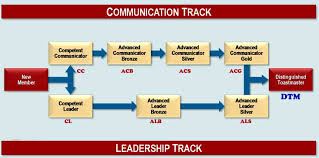
The communication track consists of the Competent Communicator, Advanced Communicator Bronze, Advanced Communicator Silver, and Advanced Communicator Gold awards.     Each of these levels requires you to do 10 speeches, the first set of 10 from the Competent Communicator Manual, and the subsequent 10 speeches from two separate Advanced manuals containing five speeches each (a total of 15 Advanced manuals exist).

DTM Program

The leadership track consists of the Competent Leadership award, which requires you to develop your skills supporting the meeting in various support roles, anywhere from the simple (Timer, Grammarian) to the more complex (Toastmaster, General Evaluator).    The Advanced Leadership Bronze award is obtained by being an officer of the club, and the Advanced Leadership Silver award is obtained by taking your leadership skills beyond the club in three ways:  by 1) helping create a new club or nurture it once it has been created, 2) doing a High Performance Leadership process to help with process improvement within the District, and 3) serving as a District officer, usually the Area Director, the first level of District leadership beyond the club level.

Once both of those tracks are completed, you earn the Distinguished Toastmaster award, because you have shown that you are a polished speaker and experienced leader.

If you stick to the educational program, you can achieve it anywhere from between 3-5 years after entering Toastmasters.    In my case, I plan on completing the last requirement, the Advanced Leadership Silver award, in October, which means I will be awarded (if everything goes smoothly) the DTM award at the Fall Conference in November, just shy of my 5th year anniversary of being in Toastmasters.

But somewhere in the back of my mind, while I am racing to the “finish line”, I am thinking to myself:  what’s next?

You see, having the educational program at Toastmasters meant that there was always a goal to strive for.   I am my best when I challenge myself to meet goals, so what happens when I no longer have goals to strive for at Toastmasters?  I was afraid I was going to go from being a DTM, a Distinguished Toastmaster, to an ETM, an Extinguished Toastmaster.  So after giving it much thought this summer, I have put together five post-DTM goals that I wanted to share with people because they may in a similar situation and may be looking for ideas on what to do once they have scaled the mountain called “DTM”.

1. SECOND VERSE–SAME AS THE FIRST

One possibility is to start the program over again with the Competent Communicator manual and earn a second DTM, which should go a lot more quickly than the first.    I just ordered a new Competent Communicator and Competent Leadership manual and plan to do just that–start the cycle over again!

2.  JOIN A SECOND CLUB

Not just an ordinary club, but a specialty club.    In District 30, for example, there are specialty clubs for speakers aspiring to becoming professional speakers, like the Windy City Professional Speakers Club. There are clubs for people in a certain profession, such as project managers, like the Project Management Institute Chicagoland Toastmasters Club.    I’ve joined them both in addition to my home club, Homewood-Flossmoor Toastmasters Club.   It takes the speaking and leadership skills I honed in my home club and now applies them to my career in very focused ways.

3.  LEARN A FOREIGN LANGUAGE

Some clubs in District 30 are “bilingual” clubs, meaning that you can do a speech in English OR, as an option, in a foreign language such as Spanish, French, and German.    Although I don’t plan to join such clubs right away, I do plan to visit them as a Club Ambassador, which is a program in and of itself in District 30 that encourages such visits to explore the wider Toastmaster universe within the District.    In this way, i can practice foreign languages while doing what I used to dread, but now love instead, namely, giving speeches!   It’s my goal to visit each of those three clubs I referred to above and give speeches in Spanish, French, and German by the end of the current Toastmasters year which ends in June 2016.

4.  PURSUE SPEAKING OPPORTUNITIES OUTSIDE OF TOASTMASTERS

Part of my reason for joining the Windy City Professional Speakers Club was to polish my speaking skills so that I could actively pursue speaking opportunities outside of the Toastmasters world.    I have landed two speaking opportunities, one as the emcee for the reunion celebration of the 40th anniversary of the graduating class of 1975 from Homewood-Flossmoor High School, which just took place last weekend.   The other one is as the guest speaker for the Multicultural Connections Club in Chicago, where I am speaking about my passion for learning foreign languages as a key to promoting multicultural and international understanding.    I am sure that the confidence I gain from these opportunities will lead to other opportunities down the line.

5.  PURSUE LEADERSHIP BEYOND THE AREA LEVEL

I started out going beyond the club level of leadership by being an Assistant Area Governor for Area 56 of the South Division of District 30.   I assisted Felton Armand, the Area Governor, in visiting clubs, filling out Club Visit Reports, running Area Speech Contests, and assisting at the Division Speech Contests.    Then last year, when I became Area Governor, I was essentially doing the job for the second time, and it made the job a lot easier.    Not just because I had done all of the work before, but because I had established relationships with many people in the District leadership as an Asst. Area Governor, so I hit the ground running as the Area Governor.

This year I decided to go to the next level as Division Director assisting all of the new Area Directors (the new name for the position that used to be called the “Area Governor”).    I’m doing it by being an Assistant Division Director for LaShonda Milton so that next year, when I am the actual Division Director, it will all seem so familiar somehow.

And being around the District leadership for now the third year in a row, I am already thinking about what kind of District-level positions I would like to pursue before becoming the District Director.   I don’t know if I will actually make it that far, which will require an additional five years within Toastmasters to achieve.   But it’s a worthwhile goal, and I need goals in front of me to keep me distinguishing myself long after the DTM award is sitting collect dust on my mantelpiece.

So start thinking about the road map you will take after you become a DTM.   When you get to the DTM award, and think that you have reached the highest mountain, take a rest and get up fresh the next morning.   You may find with the crisp, clear morning air that you look around you and see that what you thought was the peak of the highest mountain is in reality the base camp for your next summit!

5 Tips for Putting on a Successful Toastmasters Speech Contest at the Area Level


If it’s September, then it means that kids are back in school, and Toastmasters are preparing for the Fall Speech Contest.   In District 30 (Chicagoland area), the Fall Speech Contest consists of the Evaluation and Humorous Speech Contests.

I am the Assistant Division Governor for Area 56 in the South Division of District 30, and I was an Area Governor last year and an Assistant Area Governor the year before that.   This year I’m not putting on the Area Contests, but I am helping all of the new Area Directors (the new title for what used to be the Area Governor role).    At the first District Executive Committee meeting in July, here’s the advice I gave them to help make their contests so smoothly

1. Consider having a joint Area Contest

In our South Division, we have 6 areas.    Rather than having six area contests in the space of about three weeks, I recommended for Area Directors to get together and see if they could put on a joint Area Contest.    This is especially helpful if some area has fewer clubs or has clubs that don’t participate in speech contests, because the smaller area can team up with a larger area and the time needed for the joint contest will be less than if you had separate contests.   Why? Because you can double up on roles by having the timers, ballot counters, Sergeant at Arms, and even the judges perform the roles for both contests.

There’s a lot of variety here–you can have one complete contest of the evaluation and humorous speech contest for one area, followed by a break and then the entire complete contest of the evaluation and humorous speech contest for the other area.    However, I have seen a truly joint contest where the evaluation speech contest of BOTH areas is done first, followed by the humorous speech contest for BOTH areas afterwards.    This again is especially helpful for areas that are different sizes–it also allows you to use one test speaker rather than two for the evaluation contest.

2.  Judge each other’s Area Contest

There are supposed to five judges for an Area Contest.   Rather than looking for special judges outside of your Division, get one judge from each Area so there is no bias towards any one Area’s contestants.   Yes, you will have to attend all of the Area Contests, but you don’t have to worry about getting judges for your contest because everyone else will be willing to help you at your contest if you are willing to help them with theirs.

3.  Get a backup Test Speaker

For the evaluation contest, you need a Test Speaker, but you should always get a backup.   This is a risk management strategy, because you will have someone there who can give a speech in case the test speaker is ill or is caught in traffic, etc. Have the various Area Directors of other Areas ask their club Presidents for test speakers.    You should do the same in your area, and so each Area should be able to get 2 volunteers, one planned test speaker and one backup test speaker.    Although competition is the order of the day in the contest itself, preparing for the contest is all about cooperation.

4.  Designate a Snackmaster

One of the ways to get people to go to contest–if they aren’t a contestant, that is–is to provide food at the contest    You don’t have to go overboard, but on the other hand you can improve on the standard fare of donuts and coffee with a little imagination.    Some Districts give Area Directors a budget, but if you don’t have a budget, rather than having to outlay the money yourself, designate a Snackmaster as one of the roles for the contest.   The Snackmaster can either have a club’s funds donate money for the food for a contest, or the burden can be shared by several clubs in the Area by having one club bring beverages, one bring a main dish, one bring side dishes, etc.    It makes the contest more fun and attractive for people to go to it because food makes it not just a contest, but an event!

5.  Do the paperwork early

Buy some folders and put the paperwork for the various officers in folders and get it all complete at least two days before the event.   Why?   Because then you will have the breathing space to a) review the documents to make sure there are no misspelled names, etc., and to b) cope with any last minute changes that occur in the day or so before the contest.    I once waited until the night before the contest, and my printer ink ran out, causing me to have to do a mad dash for Kinko’s before they closed.    Reduce the opportunity for drama, after all, you’re preparing for a humorous contest!

These are the tips that I passed on to the incoming Area Directors, because they made my Area Contests go smoothly.  When things go well, you are more relaxed, and often times that spontaneity is infectious, and makes everyone around you, including the contestants, do their job without stressing about it.     The audience is now your focus–let them see that in your smile when you announce–“LET THE CONTESTS BEGIN!”

Reflections at the 40th Anniversary Reunion of the Class of ’75 from Homewood-Flossmoor High School


Last weekend I not only was able to attend the reunion celebration of the 40th anniversary of the graduating class of 1975 from Homewood-Flossmoor High School, but I had a chance to participate in the planning and executing of the event.  I came back to the Chicagoland area in 2013 from the Los Angeles area, and after I decided to stay in the area and not move back to California, I started putting down roots locally in a place I hadn’t lived for three decades.

I joined a local church, a local Toastmasters Club, and a professional association, the Chicagoland chapter of the Project Management Institute.   While getting to know the area once again, I was invited by Tina Landry to go to some of the local get-togethers she chad organized for those members of the class of ’75 who lived in the general Chicagoland area.

She at one point told me about her plans for the next major reunion for the 40th anniversary of the class of ’75, and I asked her if I could get involved.  You see, I felt a little guilty for not having been to any of the major reunions before, and frankly, I wanted to give back to the class whom I had for the most part ignored during most of my adult life.

Since she knew I was the President of the local Homewood-Flossmoor Toastmasters Club, she asked if I could be the emcee for the event.  Well,  last Saturday evening was the actual event, and I should say the event went well overall.

However, as a Toastmaster, I’m glad my experience kept me from being flummoxed, because on the surface there seemed to be some problems with the event.  First of all, the main host, Tina Landry, was late because of traffic, so we ended up starting the class group photos after she arrived at 7:00 PM rather than the 6:30 PM we had originally planned for.   My opening remarks were supposed to take place from 7:00-7:30 PM, at which time dinner was supposed to start.

By 7:30 PM, the class group photos were done, but dinner started being served.  I had a hell of a time getting people to listen to me at the microphone—I had dispensed with my scripted remarks and was just trying to give the bare bones announcements to everyone as to how the tables would be called individually by the photographer to go the buffet table.  In retrospect, I understand why they resisted quieting down for the announcements—it had been 40 years since most of them had seen each other!

So I took it in stride, and kept my after dinner remarks to an absolute minimum as well, knowing full well that  people wanted to continue with the conversation that had been previously interrupted by 40 years worth of time.  But as I once told someone, there are three stages to being a Toastmaster.  One is when you are afraid to get on stage.  The second is where you are afraid to get OFF stage, because you are starting to enjoy the attention that comes with being a good public speaker.  However, the third stage is when you know when it is the right time to get on stage, and when it is the right time to get off stage, meaning your message and your audience’s needs are ultimately more important than you are.   That allowed me to “go with the flow” and adapt myself without too much difficulty.

Now, I did have a chance to mingle with everyone after my remarks and I made some observations based on the various conversations I had.

  1. Who you are is more important than what you do

Those people I gravitated towards were those people who had a positive personality .  If they had a negative personality, it’s of course possible that they wouldn’t have come to such an event.  But those people who se names and faces stuck with me were the ones who expressed joy at seeing me again, not those who were interested in comparing careers to see who was more successful.

  1. Passion is more important than profit

Those people who were artists of some sort, such as musicians or theater people, and who pursued the passion they explored in high school, were some of the happiest people I met at the reunion.  My own passion, for foreign languages, was shared by a few classmates, and we had a great time talking about how it made us see the world differently than those people who can only speak one language.  The combination of passion and discipline will see you through life!

  1. Gratitude is the best attitude

Many of the graduating class of 1975 are not with us anymore, and this reality was brought home to me by the news that 2 of the people I had reformed an acquaintance with since coming to Chicagoland had recently contracted cancer.  This made me realize that the petty pursuit of prestige is just chasing after a mirage.  The person who has helped the most people and who is remembered fondly by them, like George Bailey in It’s a Wonderful Life, are truly the richest people in town.

  1. Passing on the torch

Talking to the dozen or so teachers whom we invited to the reunion was perhaps for me the most revealing of my conversations I had that night.  They have retired, but only from their positions as instructors—most of them are busy volunteering to help the next generation of teachers to become more effectively in their profession.  For example, Shari Cohen, our biology teacher at H-F High School, now goes around demonstrating how to create and implement an AP Biology program at the high school level.  They really want to impart the wisdom they have gained through, in many cases, three decades of experience, to the teachers who want to make a difference for the next generation of students.

So looking back on my high school experience, I can say that it was the privilege of a lifetime to be who we were, when we were (the mid-70s), where we were (at Homewood-Flossmoor High School).  We are now living in the world that was starting to open up for us back then.   Those who remained truer to their own passions and dreams are the ones that seem to me to be the most fulfilled.  But whoever you were, you can always strive to more than you are now.  A lifelong love of learning is the best ticket to a good and wise life!

Homewood-Flossmoor High School 40th Anniversary of Class of 1975


As the emcee for the event, I wrote the following script for the reunion celebration of the 40th anniversary of the class of 1975 from Homewood-Flossmoor Toastmasters Club

  1. Official welcome

Welcome everybody to the 40th Reunion of the Class of ’75 from Homewood-Flossmoor High School!   Just a few preliminary announcements—in case you haven’t figured it out already, the washrooms are over by the entrance.   In case things get a little too heated up on the dance floor, the emergency exits are over there by the door you went to get your pictures taken.    We all live in a future we scarcely could have imagined back in the 70s, where we are all electronically linked to the entire world with the device the size of a package of cigarettes (hold out a cell phone)–actually it’s thinner than a pack of cigarettes, if my memories of my trips behind the biology pond serve me right.  In any case, humbly request that you put your cellphones on vibrate, mute, or the stun setting if you are a Star Trek fan.   We want you to spend some time linking with each other.  After all, for some of us, it’s been over 40 years since we’ve seen each other.

Let’s see a show of hands for all of those who are here for the first time at their high school reunion!  (Lead applause)  That includes me, because this is my first reunion as well.  My name is Jerome Rowley, and I moved back into the area from California back in 2013.  I was delighted to hear that Tina Landry was putting together a team to work on the reunion to mark the 40th anniversary of the graduation of the class of ’75 from H-F.  I asked if I join the team because I felt kind of guilty for not having been to any of the previous reunions, so this time around, I not only wanted to attend, but I wanted to make it happen for the rest of you.  And here you are!  Whether you were an athlete or a Mathlete, whether you were the valedictorian—or graduated Summa Cum Lousy.  You’re all welcome here at the 40th Reunion of the Class of ’75 from Homewood-Flossmoor High School!

  1. Honored Guests–Our Teachers

There is many groups of people in our society that I’ve had an increasing amount of respect for over the  years.  But as I now am in the position as a project manager where I’m starting to teach other people, including young people who are aspiring to be project managers themselves someday, it gives me a great appreciation for those people who put up with me, I mean, encouraged me when I was back at H-F, namely, our teachers.   Please join me in extending a warm round of applause for the teachers of H-F, including those who were able to make it to our Reunion tonight.  (List names and subject matter of teachers and have people rise in applause.)

Teaching is truly the gift that keeps on giving.  Plutarch once said that a mind is not a vessel to be filled, but a fire to be kindled.  Let’s see who is keeping the torch lit for the next generation.  Please rise and be acknowledge if you have been, or are now, an instructor at whatever level, from kindergarten to the university level and beyond.   (Wait for people to stand and applause)  (Gesturing towards the teachers table…) I think that is the greatest tribute we as a class can give you, our former teachers–that some of us have been inspired to do for others what you’ve done for us.  (Applause)

  1. Tributes–Armed Forces and First Responders

I’ve been privileged to have lived and worked abroad, and although I enjoyed the experience tremendously, I found that it increased my appreciate of the strengths of this country I call home, the United States of America.  If you have been, or are now, a veteran of any of the branches of the military, the Army, Navy, Air Force, Marines, or Coast Guard, please stand up and receive our gratitude for your service to this country.   Please continue standing.   Also, if you have a family member, a spouse, a child or even a grandchild in the military, also stand up because of your support for them.  Please continue standing as well.

And finally, I want to mention a group that I always link to that day, September 11th, 2001, when I was living in New York City.  And as people ran away from the Twin Towers to escape the devastation, I will forget the people that were running towards it—in order to help their fellow New Yorkers.  I’m talking about the first responders—if you have been, or are now, a member of the police, fire department, or, an EMT, please rise and receive our gratitude for your service to your communities.

For all of you serve this country and your community, this next song is for you (cue Steve Sanford to play patriotic song…)

  1. Remembrance and reflection Blessings (Viking Choir)

I’ve mentioned the word gratitude several times, but through the years that word has taken more and more meaning.  I keep a gratitude journal in which every day I write down three things that I am thankful for.  And today, when I was getting ready to come here, I thought of people I had gone to high school with whom I hadn’t seen for years, and who I knew were going to be here, and I was so grateful to have the chance to see them again.  But then I thought of people I had gone to high school with whom I would NOT have a chance to see again, but because they are no longer with us.  We’ve set up a table in remembrance of those classmates, and I hope you have a chance to visit that table some time this evening (gesture towards MIA table).

In remembrance of those in our class who are not, and in gratitude for those in our class whom we are seeing tonight, I would like those who were in the Viking Choir to rise and sing “The Blessings of Aaron”, and if you remember the tune, I welcome you all to join in and sing along.  (gesture to Marty Orr).

  1. Official start of dinner

To make sure that everyone gets food as soon as possible, we’ve signaled the photographer to go to each table in turn, and after he takes your picture, he will release you to go to the buffet table.  If you don’t want your picture taken or are in the witness protection program, let the photographer know.  Let the dinner begin!

(Break for meal from 7:30 to 8:00 PM)

  1. Reflection and remembrance

I hope you’ve been enjoying reminiscing and getting re-acquainted with your fellow classmates from the class of ’75.  Talking to some people, it’s like time never passed—they’ve got that same animation and sparkle in their eyes that they did back then.  However, when I went to the washroom and looked at the mirror—I realized, well, yes, time HAS passed.  40 years!

The number 40 is significant in many ways.  It represents transition or change, the concept of renewal, a new beginning.  Numerologists assign the number forty as a magical number that marks the end to a long period of testing and the start of a new beginning.

40 is a significant year, of course, the Old Testament relays the story that the Jews wandered in the desert for 40 years before reaching the promised land.  And it wasn’t because they were looking for a parking spot, either, because there wasn’t that much traffic in those days.  Forty years is more than just a few years. When you’ve gone through forty of anything–push ups, jobs, spouses, let alone 40 years living with the same spouse—it’s a substantial number.

Since we’re graduated we’ve been wandering through life for the past 40 years.  When I was in high school, a lot of my teachers and guidance counselors said, “don’t worry—success for you is JUST over the horizon.”  Which was a comforting thought back then, until many years later I found out that one of the definitions of the word “horizon” is “an imaginary line that keeps getting farther away from you the closer you get to it”.  Then I found the words of a German psychoanalyst Karlfriend Graf-Durkheim which I found a lot more comforting.  He said, “if you’re on a journey, and the end seems to keep getting farther and farther away from you, then at some point  you may realize that the real end IS the journey.”  Whatever journey you’ve been on, we’ve glad that your journey has taken you here tonight.

To reminisce about how far the journey has taken us, let’s think a little about what the world was like back in 1975.

What was the cost of a gallon of gas in 1975?    Cost of a gallon of Gas 44 -57 cents a gallon in 1975.

How much was a gallon of milk in 1975?  A gallon of milk cost $1.75

How much was a dozen eggs in 1975? A dozen eggs cost $0.77.

1975 was the year that a lot happened in politics.

  • The nation was healing from the Watergate scandal that brought end to the Presidency of Richard Nixon in August of the previous year.
  • The Vietnam War officially ended with the Fall of Saigon .
  • Republican presidential nomination went to Ronald Reagan, who was challenging incumbent President Gerald Ford.

In the world of technology, the future was starting to happen …

And in the world of culture, two legends combined into one, as

t was the end of the Post-War Boom, and the beginning of that undiscovered country known as the future, which we all live in today.  When I was in high school, I figured that, if I lived long enough to the year 2000, that I would be 43 years old.  My God, I’ll be an old man.  Well, this old man has learned to take things in stride, and things that I only read about in science fiction books have come to pass.

Let’s take another look at 1975 from our privileged vantage point of 2015 with a few games.   But first before I do that, let me invite someone who wants to tell you about those who made this event possible.   Please welcome the founder of the local John Jacobfests, our substitute Superman, John Jacob!

Thank you everyone, and now … let’s party!

Advice on How to Become a Champion Public Speaker–a speech by Dana Lamon


Dana LaMon, a blind African-American and retired judge, earned the title of World Champion of Public Speaking from Toastmasters International in 1992.   He has spoken to audiences from Asia to South Africa, including more than 35 states of the U.S., and our District 30 in Chicagoland was fortunate enough to be able to book him as the keynote speaker for our Toastmasters Leadership Institute (TLI) that was held on June 13th.    I was inspired by two of the speeches he gave at the TLI event, the speech at the opening of the Institute’s day-long program and the keynote speech he did at our luncheon.

The speech he gave at the opening was called Advice for Change, where he spells out the acronym ADVICE for those who are seeking to improve themselves in Toastmasters through their public speaking and leadership training program.

ADVICE on How to Become a Champion Public Speaker

How do you change from where you are now to becoming a champion public speaker?   Even if your goal is not to become the World Champion of Public Speaking, like Dana Lamon, he assured the audience that no matter what kind of champion you want to be, or what cause you want to champion, the art of public speaking can take you there.

1.   A is for Attitude

You have to make the moment meaningful, by willing to temporary forget the past, and be open to new ideas, new techniques, and new challenges.   When you are faced by a change, you have three choices, you can actively resist, you can passively adjust, or you can actively use the opportunity to grow.     If you focus on the now rather than the past, you will find it easier to let go of resistance and start to willingly change.

2.  D is for Desire

If you know what you want to do as a public speaker, you will know what adjustments you will need to make to get yourself to change towards that goal.    Find those who have done it before you and watch what they do.    However, how they do what they do is a different matter:    you will have to be authentic to your own voice and your own style in order to succeed.    So you can copy techniques, of others, but retain your own integrity in adapting them to yourself.

3.  V is for Vision

Keep a mental picture prominently in view, so that if your immediate path wavers, you will be able to hone in on where you need to get go next, like an internal GPS system.

4.  E is for … Innergy

What is Innergy?    A word Dana Lamon made up that encapsulates the power that comes from within that propels you towards the direction of change.

  • I can–rather than saying to yourself “I would like” to be a champion, actually spend some time feeling the feeling of what it would be like to be a champion public speaker.    What kind of influence would you be able to yield?    Feeling this feeling as if it already existed right now, and not sometime in the future, is a key emotional element towards identifying with success.
  • I will–if you have a so-called “failure” on your way towards your final goal, do not let it deter you, but stop and take stock of what you can learn from it, and then move on.     So many people quit because they are discouraging by having to pay their dues before they start receiving the fruits of their efforts.
  • I connect–connect with others who are on the same journey, either those who have gone on ahead of you, so you can be inspired to achieve more, or those who are behind you.    Helping others will give you additional motivational for keeping on the pathway towards success.   Network with as many people as possible and assist them, so they will remember you and be willing to assist you.

5.  C is for Control

Always stay in control when you are on stage, no matter what the circumstances are that you may encounter.    If there is a technical difficulty, you may acknowledge it, but don’t belabor the situation with additional apologies.    If you pretend to ignore it, your audience will, too!    If something happens unexpectedly, you can make the audience think that it was part of the program.   Of course, this takes preparation, but it takes mental agility–which is where the impromptu speeches of Toastmasters, aka Table Topics speeches, come into play.

6.   E is for Excellence

You need to be committed to moving forward.    If circumstances put roadblocks in your way, find another route.    If someone tells you no, keep looking for the person who will say yes.    You must have the drive for excellence!

In fact, he said this drive for excellence was so important, he had an acronym for that as well, which he shared with us during the keynote noon-time address.   That will be the subject of the next post!

Happy (Toastmasters) New Year!


Today is the first day of the Toastmasters New Year, which runs from July 1st, 2015, through June 30th, 2016.

Just like at the time of the regular New Year’s celebration, I make a plan for the year.    Resolutions are nice, but those are essentially wishes–to make them come true requires a plan.    What is in my plan for the new Toastmasters year?    That’s the subject of today’s post.

1.   Member Goals

a.   Join Windy City Professional Speakers Club

I joined my first Toastmasters International club back at the end of 2010, so that means I’ve been a member of Toastmasters for about four and a half years now.    I became a dual member of my home club, Yorba Linda Achievers, and a professional club, Orange County Project Masters, a Toastmasters club exclusively for project managers.    When I moved to Chicago in the summer of 2013, I continued being a dual member, first of my new home club, Homewood-Flossmoor Toastmasters, and then the Chicago version of a club for project managers, Project Management Institute (PMI) Chicagoland Toastmasters Club.

Now I am contemplating joining a third club, this one designed for those who are professional speakers or those who want a professional career involving public speaking.   It’s called Windy City Professional Speakers Club, and it’s a unique club in several ways.    First of all, you can be invited to the club as a guest, but you have to attend three meetings before you are allowed to audition for membership.    I just went to my third meeting last Sunday, so I am eligible to audition for the club on Sunday, July 26th.    I want to be a member of a professional speakers club because in my volunteer position as Director of Certification at the Chicagoland chapter of the Project Management Institute, I work with professional educators and am in training to become one myself.    I have taught four times already for Dushun Mosley of EduTeach, who runs a PMP study group for a company based in New York called NetCom.    Although I am just a substitute teacher, I am paid for my efforts, so I consider myself a professional teacher.    I plan to apply for a more permanent position after I am done with my volunteer position at PMI Chicagoland in December.   In that position as Director of Certification, a run a study group for free for the members of the chapter who are studying for the PMP exam, and it is there that I want to improve myself.     The study group is via conference call, but I want to do a video conference, and I want to use my training at Windy City Professional Speakers Club to make me a more dynamic teacher.

b.   Start High Performance Leadership Project

I have achieved my Advanced Communicator Gold award and the Advanced Leader Bronze award.    For the Advanced Leader Silver award, there are three qualifications needed:   1) be a club coach, sponsor, or mentor,  2) serve a term as a district-level officer (including being an Area Governor), and 3) complete a High Performance Leadership (HPL) project.   One year ago, I sponsored a new club, so that milestone has been achieved.    As of yesterday, I successfully completed a one-year term as an Area Governor.   This means that I only have one more piece of the puzzle to complete, the HPL project, in order to qualify for the Advanced Leader Silver award, which together with the Advanced Communicator Gold award, will qualify me to achieve the Distinguished Toastmaster award, the highest educational award one can achieve as a member of Toastmasters International.    My HPL project is on working with professionals in linguistics and English as a Second Language (ESL) to create a library of resources for those members of our District 30, which covers the Chicagoland area, for whom English is not their first language.    This will be helpful not only to those ESL members of clubs, but to the officers in those clubs who want to assist those members, but may not have the resources to do so.

I plan to start it now in July and finish it by September, so that I can present my results at the Fall Conference.

c.  Club Ambassador Program

I am fluent in five languages other than English, namely, Spanish, French, German, Chinese and Japanese.   I have taken proficiency tests in those languages to certify that I am fluent, but my membership in Toastmasters has led me to my next goal:   to be able to do a speech in all of those languages.    Now I have already had one experience as a professional speaker, which was to be an MC at a wedding anniversary for a fellow Toastmasters Club member whose parents were having their 50th wedding anniversary.    They were both Japanese-Americans, so I needed to speak both Japanese (to the older generation) and English (to the younger generation) at the event.    But I now want to do speeches in the other four languages, and fortunately, there are foreign language-themed clubs in District 30 for all four of them, and I want to visit those clubs as a Club Ambassador and do a speech in each of them sometime within the next year.

2.   Club Officer Goals

a.   Become Presidents Distinguished Club (for home club) and Select Distinguished Club (for professional club)

I just ended my first term as being a President of a Toastmasters Club, the Homewood-Flossmoor Toastmasters Club, and it was a great learning experience as a Toastmaster and as a leader.   As the “public face” of the club, you interact with prospective guests to persuade them to become members, and you interact with members to persuade them to be active members.    You do this not just with your own efforts, but by orchestrating the efforts of all of the club officers.    You need to set the club goals for the year in what is called the Club Success Plan, but you have to obtain buy-in from the club officers and then the members in order for it to be successful.    As the President of the club, I was able to get our club members to come together to achieve all 10 points in the Distinguished Club Program, which made our club as President’s Distinguished Club.    I want to work the same way in my professional club, the PMI Chicagoland Toastmasters Club, as President of that Club in the coming year.    I want our club to be at least a Select Distinguished Club in the coming year.     This means doing a “quality control” checklist called Moments of Truth sometime in July, and then using those results to come up with process improvement projects that the club officers will carry out during the rest of the year.    This will also prepare us for our visit from our Area Director, Bill Morrill, when he comes to visit in August, because his Area Director Club Visit form is based on that Moments of Truth checklist.

b.  Assist Club Officers (for Windy City Professional Club)

Assuming that I pass the audition in July for the professional speakers club, I want to become a member of one of the committees that assist the Club Officers.    The reason is that I want to use my project manager skills to help organize and accomplish the work of the club.

3.  District Officer Goals

Last year I was an Area Governor, and in the coming year, I am an Asst. Division Governor and plan to use the year to prepare to be a Division Governor next year.    To that end, I want to accomplish the following.

a.   Assist Area Directors

Area Governors are now Area Directors, which means that they are doing the job I did last year.    This means I know exactly what they are going through, and am in a position to help them where they need it most.    I want my own area, Area S56, to become a Select Distinguished Area, which means that 3 out of 4 clubs need to be Distinguished Clubs or better.    This shouldn’t be too much of a stretch, because this is what my Area did last year.    It didn’t become a Distinguished Area, however, because it lost a club.    This year, if we maintain the 3 out of 4 clubs being at Distinguished Area or higher, we will become a Select Distinguished.   Rather than trying to be a Presidents Distinguished Area, which would mean creating a new club, I would rather the Area Director focus on having all 4 clubs be Distinguished Clubs.    That would be a great legacy going forward.    Hey, if the possibility for a new club happens, then great, but if it does go forward, the sponsors and the club officers have to have rock-solid commitments to the club.    I would rather not see a new club go forward under my watch as a Division Governor, than to have a club open prematurely and then close due to lack of continued support.

b.  Magnify Influence of Windy City Professional Speakers Club

As an Asst. Division Director, I am in a unique position to help the club magnify its influence in the district in three ways.  First of all, I can get the word out to those in the South Division about the club, and look for those with potential as professional speakers and invite them to the club.    Second of all, I can help get Evaluation Workshops set up that can help the clubs in the District get desperately needed help in improving their evaluations.     And thirdly, I can scout out the possibility for creating new professional-level Toastmasters Clubs (Windy City is currently the only one in District 30) either downtown or in the North or South Suburbs (Windy City is in the West Suburbs).

4.  Additional Goals

a.   Assist Veterans

As a member of PMI Chicagoland, I assist the group of chapter members who are mentoring a group of veterans in conjunction with the Black Diamond charity.    Currently I teach a group of veterans with a study group for the PMP study group, the same way that I do for the regular PMI Chicagoland chapter members.    I also am assisting at a group of mentoring sessions, one which completed last Saturday, and the other two coming up at the end of July and August.   In the July session, I will talk about Toastmasters and how it can help them as project managers and leaders.

b.  Conquer “Action” Style of Communication

In a “Team Dynamics” exercise we did last year when I first became an Area Governor, I found that out of the four styles of communication, I had a primary strength in “Ideas” and a secondary strength in the “Process” communication style.  My weaknesses were “People” and “Action”.   I decided to work on my “People” skills, and at our Division Director training session I went to in June, I found that my score in the “People” communication style had improved to the point that it was equal to my secondary strength (which was still “Process”).    My goal for the coming year is to get the last weakness, my “Action” style of communication, up closer to the other three styles.

This is am ambitious list of goals for the New Year, but when I do my monthly planning, I will include every month a piece of these goals so that by the end of the year, I will accomplish at least a majority of them.   But it would great to complete them all!    I’ll use this post as a record and see how I stack up on June 30th, 2016…

Washington’s Crossing: The Pivotal Moment of the American Revolution


In the book Washington’s Crossing by David Hackett Fischer, he tells of the pivotal moment in the American Revolution that occurred at Christmas 1776.   Most Americans when they look back on the year 1776 think of it with patriotic pride and a sense of optimism, but Americans at that time saw 1776 as a year of despair, when the fate of the Revolution seemed dark.

This was because earlier that year, the British had routed George Washington and his army from New York, and he was driven across the Delaware river after losing 90 percent of his army.   However, Washington did not let the revolution die, but struck on Christmas night during a winter storm by leading his men across the Delaware and attacking the exhausted garrison of Hessian mercenary troops at Trenton.

He continued the momentum of this surprise assault by rushing the men in the cover of darkness up a side road behind the enemy and striking at Princeton, where he defeated a British brigade.   This caused a loss of morale on the British side which, in a telling analogy by the author, he likened to the loss of morale which occurred on the American side in the Vietnam war due to the Tet offensive in January 1968.

The turnaround in American fortunes came by a series of circumstances, only some of which were due to the military successes outlined above.    Thomas Paine in his pamphlet Common Sense reached the American public in a way that we can only imagine by analogy to a video that goes viral on the Internet.    His work explained in simple but elegant language that the Revolution was going to require tremendous sacrifices, but that those sacrifices were worth it because of the value of freedom and liberty.

As a counterpoint to this emphasis on the value of freedom and liberty, the English occupying army in New Jersey increased oppression of the Americans by foraging runs in the countryside that would turn to full-scale looting.   Those Americans who had been neutral in the fight were now starting to side with the rebels, and the Loyalists were having a harder time defending rule by the English.

American militia took to harassing the British and Hessian troops on their foraging runs, and this guerrilla warfare gave training and confidence to the troops who had been previously been demoralized by the experience in New York just a few months earlier.

By the time of the Christmas attacks on Trenton and Princeton, American troops were ready to turn the tables on the British and have them fight a defensive war for a change.

The result of those battles was, as mentioned above, a pivotal moment of the American Revolution, where both soldiers and civilians on the American side could start to see a possible victory, whereas the British soldiers and citizenry back in Britain were, on the other hand, starting to lose their nerve.

But other trends emerged as a result as well that reinforced Washington’s military strategy.

1.  Public Attitude

The attitudes of the American public were predicated on military actions that produced positive results.   The free press in America was not going to be tolerant of generals who failed to get results.   Washington had a keen eye on public opinion regarding the war and was aware of the expectation for decisive victories.

2.  Cost of Operations

Because of the value that Americans placed on the lives of individuals, George Washington and his officers designed operations to minimize casualties on their side.   Plans that vetoed that would run the risk of creating too many losses.

3.  Fixed Strategy, Flexible Tactics

Although Washington’s strategic purposes were constant, to preserve the army and win independence, the initial supply problems and other difficulties he faced earlier in 1776 forced him to be pragmatic, and he learned how to quickly modify his plans when circumstances changed, both for the worse and for the better.    When the militias started harassing British troops in the “Forage War” in the New Jersey countryside, this was not  initiated by Washington but sprung up independently by militias guided by American farmers who were sympathetic to their cause and who knew the territory well.    Washington then capitalized on these efforts and lent assistance to them when needed, always trying to produce large gains with small costs.

4.  Initiative and Tempo

The defeats around New York taught Washington that the leaders needed to seize initiative and then hold it.   He was able to do this because Washington was exceedingly conscious of using time as a weapon by controlling the tempo and rhythm of a campaign.   He tried to attack at night, when the British were less prepared, or at the first light of dawn when their troops were still asleep, as happened in the attack on Trenton.    But when the attack was successful, he had the baggage move down the road along the river, so as not to be encumbered by it when he sped his army towards Princeton.    American troops always moved more rapidly than their opponents, and this gave them advantage.

5.  The Policy of Humanity

John Adams set the tone by stating the guiding humanitarian principles of the American Republic would always support the policy of humanity towards the enemy.   This meant that wounded British and Hessian soldiers were not summarily killed, but “given quarter” and taken prisoner under humane conditions.  As the war went on, attitudes of British leaders and soldiers hardened and no quarter was given to American wounded.    This helped win the hearts and minds of those who had been on the fence of the war, particularly in contrast to the humanitarian position taken by the Americans.

In fact, the Hessian troops were so amazed at the humane treatment that they had received, especially when they had certainly not reciprocated, that one quarter of them ended up staying in America after the revolution, and many of those who returned back to Prussia then brought their families and emigrated to America.    In my mind, this is the crowning achievement of the American Revolution, that it changed the face of warfare while not forgetting the welfare of both the citizens and the combatants on both sides.

As David Fischer Hackett put it in the concluding passage of his book, “The story of Washington’s Crossing tells us that Americans in an earlier generation were capable of acting in a higher spirit–and so are we.”

Agile Project Management–What Agile Isn’t


Anthony Mersino, in his new book Agile Project Management:  A Nuts and Bolts Guide to Success, takes a unique approach in his first chapter Introducing Agile Project Management by explaining not what Agile Project Management, but what it isn’t.

It’s like the story I heard one time of someone who was in an art class.   The students were all given a block of marble and a model of an elephant, and were told to sculpt an elephant from the marble.    The students were all perplexed at the difficulty of the task, because they had all been given rather simple assignments in class before.   The teacher thought for a moment, and said “it’s quite simple.   Just take your block of marble and chip off everything that isn’t an elephant.”   The point of the story is that sometimes illuminating a problem via a negative example isn’t that illuminating after all.   But in Anthony Mersino’s case, I think it has merit.   Let’s see how he undefines Agile Project Management.

1.  Agile Project Management ≠ A New Software Development Method

Agile certainly includes software development methods, like Dynamic System Development Method (SDM) or Crystal Methods, but in reality the roots of Agile, if you look deep enough, are in Lean Product Development and the Toyota Product System.   Therefore, it has had from the beginning potential for being used beyond the realm of software development.

2.  Agile ≠ A Silver Bullet

If you watch any amount of television, you are bound to come across an add that promotes weight loss with a magic pill that allows you to lose weight without dieting and without exercise.    It often sounds too good to be true, and that’s because it usually is.   in the area of management techniques, there have been many contenders for the equivalent of a “diet pill”, but the reality is that Agile is not a quick fix or miracle cure.   It is, after all, a methodology but one that requires not just the mindless application of a algorithm, but the adoption of a mindset.

3.  Agile ≠ Iterative and Incremental Development

Well, here we are getting closer to what agile is.  Although Agile relies on iterative and incremental development, that is such the form that the process takes.   The purpose of Agile is a lot more important, and that is to “design and build … projects in a highly flexible and interactive manner.”   The word “flexible” is implied by “agile”, but the “interactive” is very important in that Agile is highly dependent on teams that are cross-functional and self-organizing.

4.  Agile ≠ Anti-Project Management

Traditional project management is for projects which are “temporary endeavors undertaken to create a unique product, service, or result.   Agile teams, on the other hand, are not temporary but endeavor to stay together indefinitely.   Agile teams work on a steady stream of repeatable activities, and resemble product development rather than project management.   However, Agile is not the opposite of project management.   Agile takes the role of a traditional project manager and distributes them to the team or to the business owner for the team.   The “emergent property” that Agile Project Management has over traditional project management is that it:

    • helps reduce management overhead
    • puts accountability for results on those individuals who are in a position to impact those results

Project managers, according to Anthony Mersino, need to unlearn what they may have heard about Agile Project Management, and understand Agile so that they can play a role that adds the most value.   In order to reinvent themselves to participate in an agile team, they need to uncover the spirit of invention that is at the core of Agile.   Explaining that spirit of invention is what Anthony Mersino does in the rest of his book, which I intend to continue blogging about.