3 Essential Questions to Ask Yourself When Writing A Speech


At the District 30 (Chicagoland) Toastmaster Leadership Institute for Winter 2013-2014, the 2004 World Champion of Public Speaking, Randy J. Harvey, PhD., J.D., was invited to be the keynote speaker for the event.

In his presentation, he outlined the three essential questions you need to ask yourself when you are considering writing a speech.    This post is a summary of that presentation.

1.   Who are you?

Everything you do is an outward manifestation of your inward philosophy of life.    You may not have formulated it in concrete terms, or even know what those terms are, but it is the foundation of your actions.    You need to ask yourself “what do I believe?”  “What are the essential characteristics that would describe me?”

The reason why you need to ask this question is because those people who are aware of their philosophy of life, and do speeches based on that knowledge, are those that come across as more authentic to an audience because they are not just parroting something they have read, they are talking about something which comes out of their LIFE.

2.  What are you about?

A belief is something that can change, but a core value is something which is relatively constant in one’s life, and is something even more fundamental to who you are than a belief.     If you were to place a narrow board across two of the highest buildings in Chicago on an icy, windy day, would you be willing to cross that for a $1 million?    Probably not, because you would be risking your life, and your life is worth more than that.

But if you saw your child in danger on the other building, you might indeed be willing to make that sacrifice.    That is because the love of your child is a core value that is so important that you would be willing to make the ultimate sacrifice of your own life if it meant saving that child’s life.

3.  Where did you learn that?

There are both people and events which have clarified for us those beliefs and core values which were discussed in the previous two paragraphs.    If you relive an event which taught you a moral value, or describe a person that taught you that moral value, then you are recreating the wellspring of your moral existence.

If you ask yourself these three questions, you will be able to find your own voice that is authentic, meaning that it is primarily created out of your own experiences, and not derived from the thoughts or ideas of others.    When you speak from this voice, you will find yourself speaking at a level of authenticity that you need to become a world-class speaker, whether you enter the International Speech Contest or not.

Dr. Harvey’s talk reminded me of the time when I lost my first speech contest.   I tried really hard but only got as far as the Area Contest, but didn’t go on to the Division Contest.    Part of me was disappointed, although I put on a brave, smiling face to all the others in the room.    One of the judges came up to me after the end of the contest and said, “I just wanted to encourage you to compete again in the future, because you’ve got ‘the fire’.”    “What do you mean, ‘the fire’?”  The judge went on to explain that what she meant was that I spoke from a sincere conviction, and that came across in the passion of my speech.    She said, “Toastmasters can teach you technique, but they can’t teach you to have conviction.   You’ve got to find that out for yourself, and it looks like you’ve already found that.    Come back next year, and you’ll see how far you’ve progressed.”

On the way home, I started to think, “well maybe I should join the next contest.    I wonder what I can talk about?”  And then I caught myself coming home from one contest and thinking already about what I was going to do in the next contest, and I laughed.   “I’m hooked!”    But it took someone to recognize that conviction, that “voice” inside the unpolished speaker, and I am so grateful she spoke up and decided to encourage me.    That conviction is what Dr. Harvey was talking about uncovering in his speech, and I’m so glad I went to have these important lessons reinforced.

I now have a club to go back to and inspire for the Spring Speech Contest!

5th Edition PMBOK® Guide–Step 6: Memorizing Inputs & Outputs (Procurement Management Part 2)


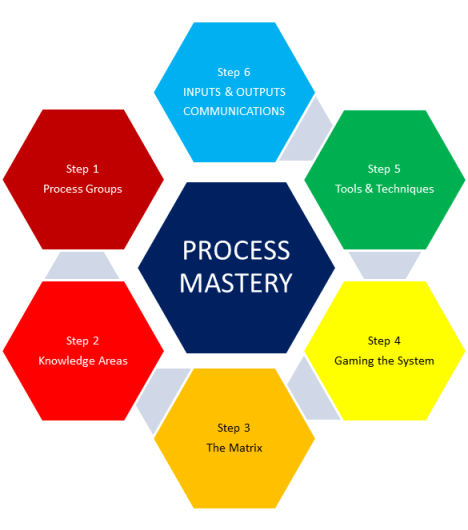
In this next series of posts on memorizing the processes, we move on to the final step 6, which is memorizing the INPUTS & OUTPUTS associated with each of the 47 processes.   In order to breakdown the memorization into more bite-size chunks, I am breaking down the processes in the 10 knowledge areas into 2 or 3 posts each.

This post covers chapter 12 of the PMBOK® Guide, which covers the Procurement Knowledge Area. This knowledge area contains 4 processes, one in the Planning Process Group, one in the Executing Process Group, one in the Monitoring & Controlling Group, and one in the Closing Process Group.    The Procurement Knowledge Area is the only knowledge area other than the Integration Knowledge Area to have a process in the Closing Process Group.

I am splitting the discussion of the Inputs & Outputs into two different posts, each covering two processes.   This post will cover the last two of the four procurement processes, Process 12.3 Control Procurements and 12.4 Close Procurements.

2.  Review of processes 12.3 and 12.4 together with their ITTOs (Inputs, Tools & Techniques, Outputs)

12.3 Control Procurements is the process of managing procurement relationships, monitoring contract performance, and making changes and corrections as appropriate.

12.4 Close Procurements is the process of completing each project procurement.

As usual, in the list of inputs, I use abbreviations for the generic inputs of Enterprise Environmental Factors (EEFs) and Organizational Process Assets (OPAs).

Process Name Tools & Techniques Inputs Outputs
12.3 Control Procurements 1. Contract change control system

2. Procurement performance reviews

3. Inspections and audits

4. Performance reporting

5. Payment systems

6. Claims administration

7. Records management system

1. Project management plan

2. Procurement documents

3. Agreements

4. Approved change requests

5. Work performance reports

6. Work performance data


1. Work performance information

2. Change requests

3. Project management plan updates

4. Project documents updates

5. OPAs updates

12.4 Close Procurements 1. Procurement audits

2. Procurement negotiations

3. Records management system

1. Project management plan

2. Procurement documents

1. Closed procurements

2. OPAs updates

3.  Outputs of Process 12.3 Control Procurements and 12.4 Close Procurements

a. Work performance information (12.3 Control Procurements)

As a result of the process 12.3 Control Procurements, work performance information provides a basis for identification of current or potential problems, which may assist in the event that there is a dispute with the vendor.

Contract compliance reports provide procuring organizations a mechanism to track specific deliverables expected and received from vendors.

b. Change requests (12.3 Control Procurements)

Change requests may result from the 12.3 Control Procurements process, and may includes changes to any of the subsidiary plans of the Project Management Plan.   These requests are processed for review and approval in the process 4.5 Perform Integrated Change Control.

c. Project management plan updates (12.3 Control Procurements)

The elements of the project management plan that may be updated as a result of 12.3 Control Procurements are:

  • Procurement management plan–updated to reflect any approved change requests that affect procurement management, including impacts to costs or schedules
  • Schedule baseline–if there are slippages that impact overall project performance, the schedule baseline may need to be updated
  • Cost baseline–if there are changes that impact overall project costs, the cost baseline may need to be updated

d. Project documents updates (12.3 Control Procurements)

The procurement documentation that may be updated as a result of 12.3 Control Procurements includes the following:

  • Procurement contract–with all supporting schedule, approved change requests, and requested but unapproved change requests
  • Technical documentation developed by the seller
  • Work performance information–including deliverables, seller performance reports and warranties
  • Financial documents–including invoices and payment records
  • Results of contract-related inspections

e. OPAs updates (12.3 Control Procurements and 12.4 Close Procurements)

The OPAs that may be updated as a result of the process 12.3 Control Procurements:

  • Correspondence–contract terms and conditions often require written documentation of certain aspects of buyer/seller communications
  • Payment schedules and requests–should be made in accordance with the procurement contract terms and conditions
  • Seller performance evaluation documentation–this is prepared by the buyer; it documents the seller’s ability to continue to perform work on the current contract

The OPAs that may be updated as a result of the process 12.4 Close Procurements are:

  • Procurement file–a complete set of indexed contract documentation, including the closed contract
  • Deliverable acceptance–documentation of formal acceptance of seller-provided deliverables
  • Lessons learned documentation–what has been experienced, process improvement recommendations

f. Closed procurements (12.3 Control Procurements)

The buyer provides the seller with formal written notice that the contract has been completed.  The requirements for formal procurement closure are usually defined in the terms and conditions of the procurement contract and are included in the Procurement Management Plan.

4.  Inputs of Process 12.3 Control Procurements and 12.4 Close Procurements

a. Project management plan (12.3 Control Procurements and 12.4 Close Procurements)

Okay, the PMBOK® Guide says the overall Project Management Plan is an input, but in reality, the particular subsidiary management plan of the overall Project Management Plan that is relevant to the process 12.3 is, of course, the Procurement Management Plan (the output of process 12.1 Plan Procurement Management).    As I mentioned in the previous post, the Procurement Management Plan, like the Risk Management Plan, has elements that are related to all of the other knowledge areas.   Here are the elements of the Procurement Management Plan, which are arranged by the knowledge area that they relate to:

Related Knowledge Area  Plan Element
1. Integration Project constraints and assumptions that could affect planned procurements
2. Scope Direction to sellers on developing and maintaining work breakdown structure (WBS)
3. Format for procurement statement of work (SOW) to be put in contract
4. Time Coordination of procurement with project scheduling
5. Handling long lead times to purchase certain items from sellers and coordinating extra time needed with project schedule
6. Linking make-or-buy decision with Estimate Activity Resources and Develop Schedule processes
7. Setting scheduled dates for delivery and acceptance of contract deliverables
8. Cost Whether independent estimates will be used as evaluation criteria
9. Quality Performance criteria for acceptance of deliverables
10. Human Resources Roles and responsibilities for project management team coordination with the organization’s procurement or purchasing department
11. Communications Coordination of procurement with performance reporting
12.. Risk Risk management issues related to procurement
13. Requirements for performance bonds or insurance contracts to mitigate project risk
14. Procurements Types of contracts to be used (fixed price, cost-reimbursable, or time & material)
15. Identifying pre-qualified sellers
16. Procurement metrics to be used in evaluating sellers and managing contracts
17. Management of multiple suppliers
18. Stakeholder Include sellers as one of stakeholder groups to be managed
19. EEFs Industry or professional organization information resources regarding potential sellers
20. OPAs Standardized procurement documents

b. Procurement documents (12.3 Manage Procurements and 12.4 Close Procurements)

The following documents support the administration of procurement processes:

  • Procurement contract awards
  • Procurement Statement of Work (SOW)

The following documents support the closure of procurement processes:

  • Information on contract performance related to schedule, scope, quality and cost
  • Contract change documentation
  • Payment records
  • Inspection results

This information is used for lessons learned.

c. Agreements (12.3 Control Procurements)

Agreements are the understandings between parties, including the understandings of the duties of each party.

d. Approved change requests (12.3 Control Procurements)

In the case of procurements, the approved change requests include modifications to the terms and conditions of the procurement contract, including the following:

  • Procurement SOW
  • Pricing
  • Descriptions of the products, services, or results to be provided

All procurement-related changes are formally documented in writing and approved by the process 4.5 Perform Integrated Change Control before being implemented in the process 12.3 Control Procurements.

e. Work performance reports (12.3 Control Procurements)

The documentation related to procurement performance includes the following:

  • Technical documentation–technical documentation developed by the seller in accordance with the terms of the contract
  • Work performance information–the seller’s performance reports indicate which deliverables have been completed and which have not

f. Work performance data (12.3 Control Procurements)

Work performance data relevant to the process 12.3 Control Procurements includes the following:

  • the extent to which quality standards are being satisfied
  • the costs that have been incurred or committed
  • identification of the seller invoices that have been paid

This can be used as lessons learned and as a basis for evaluating contractors for future projects.

5.  Conclusion

This concludes the review of the inputs and outputs for the last two processes of Procurement Management.   Next week, I will finish off this project by reviewing the inputs and outputs for the last knowledge area in the PMBOK® Guide, Stakeholder Management.

5th Edition PMBOK® Guide–Step 6: Memorizing Inputs & Outputs (Procurement Management Part 1)


In this next series of posts on memorizing the processes, we move on to the final step 6, which is memorizing the INPUTS & OUTPUTS associated with each of the 47 processes.   In order to breakdown the memorization into more bite-size chunks, I am breaking down the processes in the 10 knowledge areas into 2 or 3 posts each.

This post covers chapter 12 of the PMBOK® Guide, which covers the Procurement Knowledge Area. This knowledge area contains 4 processes, one in the Planning Process Group, one in the Executing Process Group, one in the Monitoring & Controlling Group, and one in the Closing Process Group.    The Procurement Knowledge Area is the only knowledge area other than the Integration Knowledge Area to have a process in the Closing Process Group.

I am splitting the discussion of the Inputs & Outputs into two different posts, each covering two processes.   This post will cover Process 12.1 Plan Procurement and Process 12.2 Conduct Procurements.

2.  Review of processes 12.1 and 12.2 together with their ITTOs (Inputs, Tools & Techniques, Outputs)

The purpose of process 12.1 Plan Procurement is to create the Procurement Management Plan, which gives the framework needed to document project procurement decisions, to specify the approach to procurement, and to identify potential sellers.

The purpose of process 12.2 Conduct Procurement is to obtain seller responses to the request for proposal (RFP) or another form of procurement request, to select a seller based on established criteria, and to award the procurement contract to that seller.

As usual, in the list of inputs, I use abbreviations for the generic inputs of Enterprise Environmental Factors (EEFs) and Organizational Process Assets (OPAs).

Process Name Tools & Techniques Inputs Outputs
12.1 Plan Procurement 1. Make-or-buy analysis

2. Expert judgment

3. Market research

4. Meetings

1. Project management plan

2. Requirements documentation

3. Risk register

4. Activity resource requirements

5. Project schedule

6. Activity cost estimates

7. Stakeholder register

8. EEFs

9. OPAs

1. Procurement management plan

2. Procurement statement of work

3. Procurement documents

4. Source selection criteria

5. Make-or-buy decisions

6. Change requests

7. Project documents updates

12.2 Conduct Procurement
1. Bidder conference

2. Proposal evaluation techniques

3. Independent estimates

4. Expert judgment

5. Advertising

6. Analytical techniques

7. Procurement negotiations

1. Procurement management plan

2. Procurement documents

3. Source selection criteria

4. Seller proposals

5. Project documents

6. Make-or-buy decisions

7. Procurement statement of work

8. OPAs

1. Selected sellers

2. Agreements

3. Resource calendars

4. Change requests

5. Project management plan updates

6. Project documents updates

3.  Outputs of process 12.1 Plan Procurement and 12.2 Conduct Procurement

a. Procurement management plan (12.1 Plan Procurement)

The Procurement Management Plan, like the Risk Management Plan, has elements that touch upon practically all of the other knowledge areas.   I have taken the list of elements of the Procurement Management Plan listed in the PMBOK® Guide and arranged them by related knowledge area in order to put some structure to this rather large list of elements.

Related Knowledge Area  Plan Element
1. Integration Project constraints and assumptions that could affect planned procurements
2. Scope Direction to sellers on developing and maintaining work breakdown structure (WBS)
3. Format for procurement statement of work (SOW) to be put in contract
4. Time Coordination of procurement with project scheduling
5. Handling long lead times to purchase certain items from sellers and coordinating extra time needed with project schedule
6. Linking make-or-buy decision with Estimate Activity Resources and Develop Schedule processes
7. Setting scheduled dates for delivery and acceptance of contract deliverables
8. Cost Whether independent estimates will be used as evaluation criteria
9. Quality Performance criteria for acceptance of deliverables
10. Human Resources Roles and responsibilities for project management team coordination with the organization’s procurement or purchasing department
11. Communications Coordination of procurement with performance reporting
12.. Risk Risk management issues related to procurement
13. Requirements for performance bonds or insurance contracts to mitigate project risk
14. Procurements Types of contracts to be used (fixed price, cost-reimbursable, or time & material)
15. Identifying pre-qualified sellers
16. Procurement metrics to be used in evaluating sellers and managing contracts
17. Management of multiple suppliers
18. Stakeholder Include sellers as one of stakeholder groups to be managed
19. EEFs Industry or professional organization information resources regarding potential sellers
20. OPAs Standardized procurement documents

b. Procurement statement of work (12.1 Plan Procurement)

The Procurement Statement of Work (or Procurement SOW) is a critical component of the procurement process.   It can be considered to be the “seed” of the procurement, and it provides suppliers with a clearly stated set of goals, requirements, and outcomes from which they can provide a quantifiable response.    For the elements of the Procurement statement of work, see paragraph p. below under Inputs.

c. Procurement documents (12.1 Plan Procurement)

There are different documents which are used to formally request procurements, among which are the following types:

  • Request for Information (RFI)
  • Invitation for Bid (IFB)
  • Request for Proposal (RFP)
  • Request for Quotation (RFQ)
  • Tender Notice
  • Invitation for Negotiation
  • Invitation for Seller’s Initial Response

Specific procurement terminology used may vary by industry and location of the procurement.

d. Source selection criteria  (12.1 Plan Procurement)

Used to rate or score seller proposals.   Selection criteria may be as narrow as simply the purchase price and the cost of delivery if the procurement item is “off-the-shelf”, or readily available from a number of acceptable sellers.   For more complex products, the following may be used as source selection criteria:

  • Understanding of need (does the seller’s proposal address the Procurement SOW?)
  • Overall or life-cycle cost (including purchase cost and operating cost)
  • Technical capability (does the seller have the technical skills and knowledge required?)
  • Risk (how much risk is embedded in the SOW?; how much risk will be assigned to the seller?; how does the seller mitigate risk?)
  • Management approach (does the seller have management processes and procedures to ensure a successful project?)
  • Technical approach (does the seller’s technical methodologies meet the procurement document requirements?)
  • Warranty (what does the seller propose to warrant in the final product, and for what period?)
  • Financial capacity (does the seller have the necessary financial resources?)
  • Production capacity and interest (does the seller have the capacity and interest to meet potential future requirements for production?)
  • Business type and size (does the seller’s enterprise meet a specific category of business set forth as a condition of the agreement award such as a small business?)
  • Past performance of sellers (what has been the past experience with selected sellers?)
  • References (can the seller provide references from prior customers?)
  • Intellectual property rights (does the sellers assert IP rights in the work processes or services they will use or in the products they produce for the project?)
  • Proprietary rights (does the sellers assert proprietary rights in the work processes or services they will use or in the products they produce for the project?)

e. Make-or-buy decisions (12.1 Plan Procurement)

This output is the result of the technique of make-or-buy analysis that is used as part of process 12.1 Plan Procurement.

f. Change requests (12.1 Plan Procurement and 12.2 Conduct Procurement)

A decision to procure rather than to produce certain goods, services, or results to be used on the project requires a change request.    As with all other change requests, it then becomes an input to process 4.5 Perform Integrated Change Control, where the change request is reviewed and either accepted or rejected.

g. Project documents updates (12.1 Plan Procurement and 12.2 Conduct Procurement)

The particular project documents that may be updated as part of the process  12.1 Plan Procurement or 12.2 Conduct Procurement are:

  • Requirements documentation
  • Requirements traceability matrix
  • Risk register
  • Stakeholder register

h. Selected sellers (12.2 Conduct Procurement)

The list of selected sellers is one of the main outputs of the 12.2 Conduct Procurement process.    Selected sellers have been judged to be in a competitive range based on the evaluation of their proposals or bids.

i. Agreements (12.2 Conduct Procurement)

A procurement agreement can be called any of the following:

  • an understanding
  • a contract
  • a subcontract
  • a purchase order

It contains the terms and conditions for the procurement.    The project management team must make sure that all agreements not only meet the specific needs of the project, but that they also adhere to the organization’s procurement policies.

j. Resource calendars (12.2 Conduct Procurement)

Includes the quantity and availability of contracted resources, as well as the dates on which each specific resource will be actively used on the project.

k. Project management plan updates (12.2 Conduct Procurement)

The following elements of the Project Management Plan may be updated as part of the 12.1 Conduct Procurement process.

  • Performance baselines (cost, scope, and schedule baselines)
  • Communications management plan
  • Procurement management plan

4.  Inputs of process 12.1 Plan Procurement and 12.2 Conduct Procurement

a. Project management plan (12.1 Plan Procurement)

Although the PMBOK® Guide lists the Project Management Plan as an input, to be more accurate, the most relevant portion of that overall plan to the 12.1 Plan Procurement process is the scope baseline, which consists of

  • Project scope statement–contains product or scope description (or alternately a service description or result description), the list of deliverables, acceptance criteria, technical issues that could impact cost estimating, and project constraints (such as required delivery dates, available skilled resources, and organizational policies)
  • WBS (contains the components of work that may be resourced externally)
  • WBS Dictionary (provides an identification of the deliverables and a description of the work in each WBS component)

b. Requirements documentation (12.1 Plan Procurement)

The requirements documentation may include

  • Product requirements that are considered during planning for procurements
  • Contractual and legal requirements (related to concerns about health, safety, security, performance, environmental, insurance, intellectual property rights, equal employment opportunity, licenses, permits)

c. Risk register (12.1 Plan Procurement)

Provides the list of risks, along with the results of risk analysis and risk response planning.

d. Activity resource requirements (12.1 Plan Procurement)

Contains information on specific needs such as people, equipment, or location.

e. Project schedule (12.1 Plan Procurement)

Contains information on required timelines or mandated delivery dates.

f. Activity cost estimates (12.1 Plan Procurement)

Used to evaluate the reasonableness of the bids or proposals received from potential sellers.

g. Stakeholder register (12.1 Plan Procurement)

Provides details on the project participants and their interests and impacts on the project.

h. EEFs (12.1 Plan Procurement)

The EEFs that are inputs to process 12.1 Plan Procurement include the following:

  • Marketplace conditions
  • Products, services or results that are available in the marketplace
  • Suppliers, including past performance  or reputation
  • Typical terms and conditions for products, services or results for the specific industry
  • Unique local requirements

i. OPAs (12.1 Plan Procurement and 12.2 Conduct Procurement)

The OPAs that are inputs to process 12.1 Plan Procurement include the following:

  • Formal procurement policies, procedures, and guidelines–most organizations have units dedicated to procurement, but when such procurement support is not available, the project team needs to supply the resources and the expertise to perform such procurement activities.
  • Management systems–considered in developing the procurement management plan and selecting the contractual relationships to be had.
  • An established multi-tier supplier system of prequalified sellers based on prior experience on previous projects

j. Procurement management plan (12.2 Conduct Procurement)

This input is the main output of process 12.1 Plan Procurement Management.   See paragraph a. above under Outputs for a complete listing of the elements of the Procurement Management Plan.

k. Procurement documents (12.2 Conduct Procurement)

Provides an audit trail for contracts and other agreements.

l. Source selection criteria (12.2 Conduct Procurement)

These can include information on the following aspects of the supplier:

  • Required capabilities
  • Capacity
  • Delivery dates
  • Product cost
  • Life-cycle cost
  • Technical expertise
  • Approach to the contract (Fixed-Price, Cost-Reimbursable, or Time & Material)

m. Seller proposals (12.2 Conduct Procurement)

Prepared in response to a procurement document package, the seller proposals form the basic information that will be used by an evaluation body to select one or more successful bidders (sellers).

n. Project documents (12.2 Conduct Procurement)

The risk register may include risk-related contract decisions.

o. Make-or-buy decisions (12.2 Conduct Procurement)

Factors that may influence make-or-buy decisions are:

  • Core capabilities of the organization
  • Value delivered by vendors meeting the need
  • Risks associated with meeting the need in a cost-effective manner
  • Capability internally compared with the vendor community

p. Procurement statement of work (12.2 Conduct Procurement)

The procurement statement of work may include the following elements:

  • Specifications
  • Quantity desired
  • Quality level
  • Performance data
  • Period of performance
  • Work location

The next post will cover the last two processes of the Procurement Management Knowledge Area, process 12.3 Control Procurements and 12.4 Close Procurements.

5th Edition PMBOK® Guide–Step 6: Memorizing Inputs & Outputs (Risk Management Part 3)


In this next series of posts on memorizing the processes, we move on to the final step 6, which is memorizing the INPUTS & OUTPUTS associated with each of the 47 processes.   In order to breakdown the memorization into more bite-size chunks, I am breaking down the processes in the 10 knowledge areas into 2 or 3 posts each.

This post covers chapter 11 of the PMBOK® Guide, which covers the Risk Knowledge Area. This knowledge area contains 6 processes, the first five of which are in the Planning Process Group, and the last of which is in the Monitoring & Controlling Group.

I am splitting the discussion of the Inputs & Outputs into three different posts, each covering two processes.   This post will cover Process 11.5 Plan Risk Responses and Process 11.6 Control Risks.

2.  Review of processes 11.5 and 11.6 together with their ITTOs (Inputs, Tools & Techniques, Outputs)

Process Name Tools & Techniques Inputs Outputs
11.5 Plan Risk Responses 1. Strategies for negative risks or threats

2. Strategies for positive risks or opportunities

3. Contingent response strategies

4. Expert judgment

1. Risk management plan

2. Risk register


1. Project management plan updates

2. Project documents updates

11.6 Control Risks 1. Risk reassessment

2. Risk audits

3. Variance and trend analysis

4. Technical performance measurement

5. Reserve analysis

6. Meetings

1. Project management plan

2. Risk register

3. Work performance data

4. Work performance reports

1. Work performance information

2. Change requests

3. Project management plan updates

4. Project documents updates

5. OPAs updates

3.  Output of processes 11.5 Plan Risk Responses and 11.6 Control Risks

a. Project management plan updates (11.5 Plan Risk Responses and 11.6 Control Risks)

In the same way that many knowledge areas contribute inputs to the risk management processes, the outputs of the risk management processes in turn affect many of these same knowledge areas.   For example, the following subsidiary plans of the overall Project Management Plan may be updated as a result of the 11.5 Plan Risk Responses process:

  • Schedule management plan–updated to reflect changes in process and practice driven by risk responses
  • Cost management plan–updated to reflect changes in process and practice driven by risk responses
  • Quality management plan–updated to reflect changes in process and practice driven by risk responses
  • Procurement management plan–updated to reflect changes in strategy (such as alterations in the make-or-buy decision or contract types)
  • Human resource management plan–updated to reflect changes in project organizational structure and resource applications driven by risk responses
  • Scope, schedule, and cost baseline–updated to reflect changes due to new, modified or omitted work generated by risk responses

b. Project documents updates (11.5 Plan Risk Responses and 11.6 Control Risks)

The following elements of the risk register may be updated as a result of the process 11.5 Plan Risk Responses:

  • Risk owners and assigned responsibilities
  • Agreed-upon response strategies
  • Specific actions to implement the chosen response strategy
  • Trigger conditions, symptoms, and warning signs of a risk occurrence
  • Budget and schedule activities required to implement the chosen responses
  • Contingency plans and triggers that call for their execution
  • Fallback plans for use as a reaction to a risk that has occurred and the primary response proves to be inadequate
  • Residual risks that are expected to remain after planned responses have been taken, as well as those that have been deliberately accepted
  • Secondary risks that arise as a direct outcome of implementing a risk response
  • Contingency reserves that are calculated based on the quantitative risk analysis of the project and the organization’s risk thresholds

Other project documents that may be updated as a result of process 11.5 Plan Risk Responses include:

  • Assumptions logs–assumptions could change as new information becomes available through the application of risk responses
  • Technical documentation–technical approaches and physical deliverables may change as new information becomes available through the application of risk responses
  • Change requests–planning for possible risk responses can often result in recommendations for changes to the resources, activities, cost estimates, etc.

As far as the process 11.6 Control Risk is concerned, the potential updates to the risk register may include:

  • Outcomes of risk reassessments, risk audits, and periodic risk reviews–these may include identification of new risks; updates to probability,  impact, priority, responses plans, and ownership of risks; and finally the closing of risks that are no longer applicable and the release of the applicable reserves
  • Actual outcomes of the project’s risks and of the risk responses–this can help project managers to plan for risks on other current projects in the organization, as well as future projects

c. Work performance information (11.6 Control Risks)

As an output of 11.6 Control Risks, work performance information is a mechanism to communicate and to support project decision making.

d. Change requests (11.6 Control Risks)

The implementation of contingency plans or workarounds can sometimes result in a change request, which may consist of

  • Recommended corrective actions
  • Recommended preventive actions

e. OPAs updates (11.6 Control Risks)

The OPAs that may be updated as a result of 11.6 Control Risks are:

  • Templates for the risk management plan (including the probability/impact matrix and risk register)
  • Risk Breakdown Structure
  • Lessons learned from project risk management activities


4.  Input of processes 11.5 Plan Risk Responses and 11.6 Control Risks

a. Risk management plan (11.5 Plan Risk Responses)

The important components of the Risk Management Plan that are inputs to this process are:

  • Risk activity-related roles and responsibilities
  • Risk analysis definitions
  • Timing of risk reviews
  • Risk thresholds (low, moderate, high risks)–helps identify those risks for which specific responses are needed

b. Project management plan (11.6 Control Risks)

The PMBOK® Guide lists the Project Management Plan as an input of process 11.6 Control Risks, but if you look at the entry closely, it specifies that the portion of the Project Management Plan that is relevant to the process is the Risk Management Plan, in particular those portions which give guidance for risk monitoring and controlling.

c.  Risk register (11.5 Plan Risk Responses and 11.6 Control Risks)

The following elements of the risk register are inputs of process 11.5 Plan Risk Responses and 11.6 Control Risks:

  • Lists of identified risks
  • Root causes of risks
  • Risk responses (potential responses are inputs to 11.5, agreed-upon responses are inputs to 11.6)
  • Risk owners
  • Risk symptoms and warning signs
  • Relative rating or priority list of project risks
  • Risks requiring responses in the near term
  • Risks for additional analysis and response
  • Trends in quantitative analysis results
  • Watch list (list of low-priority risks)
  • Contingency reserves (developed in process 11.5, these are inputs to 11.6)

d. Work performance data (11.6 Control Risks)

The work performance data that are particular relevant to the process 11.6 Control Risks are:

  • Deliverable status
  • Schedule progress
  • Costs incurred

e. Work performance reports (11.6 Control Risks)

The work performance information that is included in work performance reports, which are inputs to 11.6 Control Risks, could be impactful in controlling performance-related risks.

  • Variance analysis
  • Earned value data
  • Forecasting data

This concludes the ITTOs for the last two processes of risk management.   Tomorrow I will take up chapter 12, which covers the knowledge area of Procurement Management.


5th Edition PMBOK® Guide–Step 6: Memorizing Inputs & Outputs (Risk Management Part 2)


In this next series of posts on memorizing the processes, we move on to the final step 6, which is memorizing the INPUTS & OUTPUTS associated with each of the 47 processes.   In order to breakdown the memorization into more bite-size chunks, I am breaking down the processes in the 10 knowledge areas into 2 or 3 posts each.

This post covers chapter 11 of the PMBOK® Guide, which covers the Risk Knowledge Area. This knowledge area contains 6 processes, the first five of which are in the Planning Process Group, and the last of which is in the Monitoring & Controlling Group.

I am splitting the discussion of the Inputs & Outputs into three different posts, each covering two processes.   This post will cover Process 11.3 Perform Qualitative Risk Analysis and Process 11.4 Perform Quantitative Risk Analysis.

2.  Review of processes 11.3 and 11.4 together with their ITTOs (Inputs, Tools & Techniques, Outputs)

Process Name Tools & Techniques Inputs Outputs
11.3 Perform Qualitative Risk Analysis 1. Risk probability and impact assessment2. Probability and impact matrix

3. Risk data quality assessment

4. Risk categorization

5. Risk urgency assessment

6. Expert judgment

1. Risk management plan2. Scope baseline

3. Risk register

4. EEFs

5. OPAs

1, Project documents updates
11.4 Perform Quantitative Risk Analysis 1. Data gathering and representation techniques2. Quantitative risk analysis and modeling techniques

3. Expert judgment

1. Risk management plan2. Cost management plan

3. Schedule management plan

4. Risk register

5. EEFs

6. OPAs

1. Project documents updates

As is true of all risk  management processes, the outputs are very easy to remember because there’s only one, whereas the inputs are more numerous and come from various knowledge areas.

3.  Output of processes 11.3 Qualitative Risk Analysis and 11.4 Quantitative Risk Analysis

a.  Project documents updates (11.3 Qualitative Risk Analysis and 11.4 Quantitative Risk Analysis)

The project documents updated as part of the 11.3 Qualitative Risk Analysis process are:

  • Risk register–updated with probability and impacts for each risk, risk ranking or scores, risk urgency information or risk categorization, and a watch list for low-probability risks or risks requiring further analysis
  • Assumptions log–updated if assumptions change based on new information that becomes available during qualitative risk analysis (assumptions may also be included in the project scope statement rather than a separate assumptions log)

4.  Input of processes 11.3 Qualitative Risk Analysis and 11.4 Quantitative Risk Analysis

a. Risk management plan (11.3 Qualitative Risk Analysis and 11.4 Quantitative Risk Analysis)

The Risk Management Plan developed in the 11.1 Plan Risk Management process contains many elements relevant to the two processes 11.3 Qualitative Risk Analysis and 11.4 Quantitative Risk Analysis.

Category Plan Element Definition of Element
1. OPAs Methodology Tools and data sources from the organization to be used in risk management.
2. Time Timing How and when risk management activities will be conducted; protocol for application of contingency and management reserves.
3. Cost Budgeting Funds needed for risk management activities
4. Quality Tracking How risk activities will be recorded in order to audit and improve risk management processes.
5. HR Roles and Responsibilities Defines, for each type of activity in the risk management plan, the following:

  • Lead (accountable)
  • Team members (responsible)
  • Support (consult)
6. Communication Reporting formats Defines how the outcomes of the risk management process will be documented, analyzed, and communicated.
7. Risk Risk categories Grouping potential sources of risk on the project, often in the form of a Risk Breakdown Structure (RBS).
8. Probability and impact definitions Different levels of risk probability and impact are defined (low, medium, high, etc.)
9. Probability and impact matrix Grid for mapping the probability of each risk and its potential impact on the project.
10. Stakeholders Stakeholder risk tolerances Stakeholder risk tolerances may be revised during the course of this process.

b. Cost management plan (11.4 Quantitative Risk Analysis)

Provides guidelines on establishing and managing risk reserves (both contingency reserves and management reserves).

c. Schedule management plan (11.4 Quantitative Risk Analysis)

Provides guidelines on establishing and managing risk reserves (both contingency reserves and management reserves).

d. Scope baseline (11.3 Qualitative Risk Analysis)

The risk of projects, especially highly complex projects or those using state-of-the-art technology, can be evaluated by examining the scope baseline, in particular the project scope statement and the WBS (work breakdown structure).

e. Risk register (11.3 Qualitative Risk Analysis and 11.4 Quantitative Risk Analysis)

Contains information used to assess and prioritize risks for the process 11.3 Qualitative Risk Analysis, and is also used as a reference point for performing quantitative risk analysis in process 11.4

f. EEFs (11.3 Qualitative Risk Analysis and 11.4 Quantitative Risk Analysis)

The EEFs used as inputs for the 11.3 Qualitative Risk Analysis process and 11.4 Quantitative Risk Analysis include:

  • Industry studies of similar projects by risk specialists
  • Risk databases from industry or proprietary sources

g. OPAs (11.3 Qualitative Risk Analysis and 11.4 Quantitative Risk Analysis)

The OPAs used as inputs for the 11.3 Qualitative Risk Analysis process include

  • Information on previous, similar projects

The next post will cover the last two of the risk management processes, 11.5 Plan Risk Responses and 11.6 Control Risks.

5th Edition PMBOK® Guide–Step 6: Memorizing Inputs & Outputs (Risk Management Part 1)


In this next series of posts on memorizing the processes, we move on to the final step 6, which is memorizing the INPUTS & OUTPUTS associated with each of the 47 processes.   In order to breakdown the memorization into more bite-size chunks, I am breaking down the processes in the 10 knowledge areas into 2 or 3 posts each.

This post covers chapter 11 of the PMBOK® Guide, which covers the Risk Knowledge Area. This knowledge area contains 6 processes, the first five of which are in the Planning Process Group, and the last of which is in the Monitoring & Controlling Group.

I am splitting the discussion of the Inputs & Outputs into three different posts, each covering two processes.   This post will cover Process 11.1 Plan Risk Management and 11.2 Identify Risks.

2.  Review of processes 11.1 and 11.2 together with their ITTOs (Inputs, Tools & Techniques, Outputs)

Process Name Tools & Techniques Inputs Outputs
11.1 Plan Risk Management 1. Analytical techniques2. Expert judgment

3. Meetings

1. Project management plan2. Project charter

3. Stakeholder register

4. EEFs

5. OPAs

1. Risk Management Plan
11.2 Identify Risks 1. Documentation reviews2. Information gathering techniques

3. Checklist analysis

4. Assumptions analysis

5. Diagramming techniques

6. SWOT analysis

7. Expert judgment

1. Risk Management Plan2. Cost Management Plan

3. Schedule Management Plan

4. Quality Management Plan

5. Human Resources Management Plan

6. Scope baseline

7. Activity cost estimates

8. Activity duration estimates

9. Stakeholder register

10. Project documents

11. Procurement documents

12. EEFs

13. OPAs

1. Risk register

In general, the inputs are more numerous and more complicated to remember than the outputs.    This was never more true than in the case of Risk Management processes, especially with these first two processes.    Each process has only one output, but there are 13 inputs to 11.2 Identify Risks, which is an indication of how complex and wide-ranging the information is that goes into the process.

3.  Outputs of processes 11.1 Plan Risk Management and 11.2 Identify Risks

a. Risk Management Plan (11.1 Plan Risk Management)

The main, in fact the only, output of Plan Risk Management is the Risk Management Plan, which consists of the following elements, arranged by category:

Category Plan Element Definition of Element
1. OPAs Methodology Tools and data sources from the organization to be used in risk management.
2. Time Timing How and when risk management activities will be conducted; protocol for application of contingency and management reserves.
3. Cost Budgeting Funds needed for risk management activities
4. Quality Tracking How risk activities will be recorded in order to audit and improve risk management processes.
5. HR Roles and Responsibilities Defines, for each type of activity in the risk management plan, the following:

  • Lead (accountable)
  • Team members (responsible)
  • Support (consult)
6. Communication Reporting formats Defines how the outcomes of the risk management process will be documented, analyzed, and communicated.
7. Risk Risk categories Grouping potential sources of risk on the project, often in the form of a Risk Breakdown Structure (RBS).
8. Probability and impact definitions Different levels of risk probability and impact are defined (low, medium, high, etc.)
9. Probability and impact matrix Grid for mapping the probability of each risk and its potential impact on the project.
10. Stakeholders Stakeholder risk tolerances Stakeholder risk tolerances may be revised during the course of this process.

As you can see, there are many elements of the risk management plan that are related to other knowledge areas.   That is one of the reasons why the inputs come from many of those same knowledge areas.

b. Risk register (11.2 Identify Risks)

The risk register is an output of ALL the processes of risk management.    It starts out as an output of process 11.2 Identify Risks, but information regarding each risk is added in the course of each subsequent planning process.

At this point, after 11.2 Identify Risks, the main elements of the Risk Register are:

  • List of identified risks–sometimes put in a format of “cause-event-effect”, where if a certain cause exists, an event may occur leading to an effect.
  • List of potential responses–although process 11.5 Plan Risk Responses comes later, IF any potential responses to the identified risks are identified even this early i the planning process, they are put in the risk register

4.  Inputs of processes 11.1 Plan Risk Management and 11.2 Identify Risks

a. Project management plan (11.1 Plan Risk Management)

The most important components of the project management plan to be considered an input to this process are the performance baselines of scope, time, and cost.

b. Project charter (11.1 Plan Risk Management)

The project charter may include high-level risks, high-level project descriptions, and high-level requirements.

c. Stakeholder register (11.1 Plan Risk Management)

Provides an overview of the roles of the various stakeholders, which may provides information on how they could be affected by various risks to the project.

d. Risk Management Plan (11.2 Identify Risks)

The elements of the risk management plan that are inputs to the 11.2 Identify Risks process are:

  • Assignments of roles and responsibilities (with regard to risk-related activities)
  • Provision for risk management activities in the budget and schedule
  • Categories of risk (sometimes expressed as a risk breakdown structure)

e. Cost Management Plan (11.2 Identify Risks)

This contains processes and controls that can be used to identify risks across the project.

f. Schedule Management Plan (11.2 Identify Risks)

Provides insight project time/schedule objectives and expectations which may be impacted by risks.

g. Quality Management Plan (11.2 Identify Risks)

Provide a baseline of quality measures and metrics for use in identifying risks.

h. Human Resources Management Plan (11.2 Identify Risks)

Provides guidance on how project human resources should be defined, staffed, managed, and eventually released from the project.   These, together with roles and responsibilities, project organization charts, and the staffing management plan, form a key input in identifying risk processes.

i. Scope baseline (11.2 Identify Risks)

The project scope statement, one of the three components of the scope baseline, contains a list of project assumptions.  Uncertainty in these project assumptions should be evaluated as potential causes of project risk.

The WBS, another component of the scope baseline, is a critical input to identifying risks as it helps one understand the potential risks at a micro and macro and micro level, with risks identified at the level of work package, control account, or summary level.

j. Activity cost estimates (11.2 Identify Risks)

They provide a quantitative assessment of the likely cost to complete scheduled activities and are ideally expressed as a range, with the width of the range indicating the degree of risk.

k. Activity duration estimates (11.2 Identify Risks)

They provide time allowances for the activities or the project as a whole, and like the activity cost estimates mentioned in paragraph j above, expressed as a range, with the width of the range indicating the degree of risk.

l. Stakeholder register (11.2 Identify Risks)

Useful for identifying those stakeholders whom one should approach to solicit inputs to identify risks.

m. Project documents (11.2 Identify Risks)

The following project documents may provide the project team with information on decisions related to risk:

  • Project charter
  • Project schedule and schedule network diagrams
  • Issue log
  • Quality checklist

n. Procurement documents (11.2 Identify Risks)

Procurement documents become a key input to identifying risks associated with the procurements.

o. EEFs (11.1 Plan Risk Management and 11.2 Identify Risks)

The EEFs that are inputs to 11.1 Plan Risk Management include

  • Risk attitudes
  • Risk thresholds
  • Risk tolerances

These provide information that describes the degree of risk that an organization will be able to withstand.

The EEFs that are inputs to 11.2 Identify Risks include

  • Published information, including commercial database and academic studies of risk
  • Published checklists
  • Benchmarking and industry studies
  • Risk attitudes

p. OPAs (11.1 Plan Risk Management and 11.2 Identify Risks)

The OPAs that are inputs to 11.1 Plan Risk Management include

  • Risk categories
  • Risk statement formats
  • Risk templates
  • Roles and responsibilities
  • Authority levels of decision making
  • Lessons learned from previous projects

The OPAs that are inputs to 11.2 Identify Risks include

  • Project files, including actual data on risks from previous projects
  • Organizational and project process controls
  • Risk statement formats or templates
  • Lessons learned from previous projects

You can see by the very long list of inputs that risk management is intimately related to all other knowledge areas.   The uncertainty regarding cost and schedule estimates, for example, is directly related to the degree of risk, which can be examined in terms of its cause by looking at the underlying assumptions behind those estimates.

The process 11.2 Identify Risks is one of the most complicated processes of all the 47 project management processes, and one way to understand this complexity to realize how many different knowledge areas provide inputs to it.   Once you understand this complexity, however, it will give you a new appreciation as to why anticipating problems on a project and preventing them should have a higher priority than simply dealing with problems as they occur.

Essential Integral, Lesson Four: Levels (One)


1.  Introduction

The concept  of levels deals with the levels of individual development, along with activities that seek to cultivate an awareness of developmental complexity and the ability to apply levels in communication.

The topic is complicated enough that it requires two lessons to cover the entire subject.

TO BE CONTINUED

Bidder 70: A Story of Environmental Activism


At the Unitarian Universalist church in Park Forest, every month there is a movie night, where there is a movie chosen from various topics such as environmental issues, food and nutrition, or political issues both internal and global.

One of the last movies to be shown for 2013 was shown in October and that was Bidder 70.   Federal land was essentially being gifted to energy and mining industries by the Bush Administration without any appropriate environmental impact study.   A college student named Tim DeChristopher went to the essentially illegal auction of federal land in 2008 and decided to be a cog in the wheel by bidding $1.7 million for a parcel of 22,000 acres on which he had no intention to drill, and of course no intention of paying for.   It was an act of civil disobedience for which he ended up going to federal prison for which he ended up serving 21 months in federal prison.

The purpose of the film was to explain Tim DeChristopher’s motivations for doing what he did, and to show this act of civil disobedience not only affected others, but how it affected his own life’s journey after he left prison.

1.  Environmental awareness

Tim DeChristopher went to school in Utah, but grew up in West Virginia, where he saw his hometown and others like it destroyed by mountaintop removal mining.    This led him to be aware of the government’s role, not in protecting the welfare of all its citizens, but in protecting the interests of corporations in the extractive industries of coal, oil, and natural gas extraction.

My own personal view is that the government does a role in protecting certain rights of corporations, such as property rights, but when the government takes resources from the public commonwealth and then gives them over to corporations without sufficient compensation for a) the value of those resources or b) the costs borne by the commonwealth due to the environmental impact of extracting, refining, or (in the case of greenhouse gases) of consuming those resources, then the government is no longer taking a neutral, balanced role but is forming a partnership with those corporations at the expense of the commonwealth.

In the case of the illegal auction cited above, it had become common practice for the Bureau of Land Management to take volunteers from the oil and gas industry to process those permits for land going to auction.    When Tim DeChristopher tried to introduce a “necessity defense” at his trial, the Judge refused to let the jury know that the reason he did the illegal act of fraud was to expose a bidding process which was itself illegal.

2.   The Accidental Activist

One thing I learned in the film that was not reported in the media coverage at the time was the fact that Tim had no intention of going to the auction to participate in it illegally.   What happened was, he went to attend the auction as a spectator, but someone who was organizing the auction apparently thought from his short haircut that he was one of the bidders, and they just assumed that he was a bidder, and was designated “Bidder 70”, which is where the title of the film comes from.   He then had to think on the spot and decided to go along with the ruse.    When he saw that parcels of land were being given over for much less than they were worth, he made the next leap of faith and decided to bid on them in an attempt to prevent their sale.

So in terms of the outward unfolding of events, it appears he was an “accidental activist,” but when you listen to Tim DeChristopher’s story, it was as if his whole life had been leading up to that point.    In any case, when it came to light that he was not in fact a legitimate bidder, he was arrested for fraud.

3.   The Aftermath

The real world result, however, was that because of DeChristopher’s actions, national attention was paid to the illegal government auction of public land leases in a “fire sale” during the last days of the Busy administration.    According to the 02/05/2009 article in the New York Times, this led to the cancellation of the leases for drilling on 77 parcels of public land in Utah.

4.   The Trial

According to Tim DeChristopher, it was important for him to highlight the fact that what he did, at least in his own mind, was an act of civil disobedience that drew attention to legalized injustice being done by the Bush Administration.    In his closing statement, he said, “You have authority over my life, but not my principles. Those are mine alone.”   I think Henry Thoreau would have been proud.

5.   The Transformation

After leaving federal prison in April 2013, Tim DeChristopher stated his intention to enter Harvard Divinity School and become … a Unitarian Universalist minister.   That was particularly poignant for us sitting there at a Unitarian Universalist church watching the film.

The film to me showed what motivates someone to do something which is technically illegal, but which serves a just cause.   Who decides what is just and what is legal?    “Just” is a conviction based on personal principles but “legal” is a concept that is constructed by the society at large.    The larger principle of the American Revolution that the government was created with the consent of the governed justified, for those participating in it, the fact that it was, from the standpoint of the British government, tantamount to treasonous rebellion.

If our government has forgotten its own rebellious beginnings, let them remember the words of John Adams, who wrote in a letter dated 10/12/1755 to his classmate Nathan Webb: “If we look into history, we shall find some nations rising from contemptible beginnings and spreading their influence, until the whole globe is subjected to their ways. When they have reached the summit of grandeur, some minute and unsuspected cause commonly affects their ruin, and the empire of the world is transferred to some other place.”


5th Edition PMBOK® Guide–Step 6: Memorizing Inputs & Outputs (Communications Management Part 2)


1. Introduction

In this next series of posts on memorizing the processes, we move on to the final step 6, which is memorizing the INPUTS & OUTPUTS associated with each of the 47 processes.   In order to breakdown the memorization into more bite-size chunks, I am breaking down the processes in the 10 knowledge areas into 2 or 3 posts each.

This post covers chapter 10 of the PMBOK® Guide, which covers the Communications Knowledge Area. This knowledge area contains 3 processes, one of which is in the Planning Process Group, the second of which is in the Executing Process Group, and the last of which is in the Monitoring & Controlling Group.

I am splitting the discussion of the Inputs & Outputs into two different posts, the first covering the first two processes, and the second one covering the last of the three processes.   This post will cover Process 10.3 Control Communication.

2. Review of processes 10.1 and 10.2 together with ITTOs (Inputs, Tools & Techniques, Outputs)

Process 10.3 Control Communications

Process Name Tools & Techniques Inputs Outputs
10.3 Control Communications 1. Information management systems

2. Expert judgment

3. Meetings

1. Project management plan

2. Project communications

3. Issue log

4. Work performance data

5. OPAs

1. Work performance information

2. Change requests

3. Project management plan updates

4. Project documents updates

5. OPAs updates

3.  Outputs of process 10.3 Control Communications

4.  Inputs of process 10.3 Control Communications

The Gratitude Journal: A Gateway to Optimism


“If we study what is merely average, we will remain merely average.” Shawn Achor

Shawn Achor is a psychologist who is the CEO of Good Think, Inc. He gave a talk about positive psychology at a TED talk  in May 2011.  I outline his talk below which he concludes with a methodology on how to press the “reset” button for your mindset so that you are more optimistic.    One of the methods includes writing three things you are grateful for, so I thought it would be appropriate to post this on Thanksgiving Day.   However, the method goes far beyond simple gratitude…

1. Escaping the law of the average

Social scientists make pronouncements about trends based on averages within populations, but people have to realize that when you are dealing with the potential for individual happiness or creativity, you need to escape the “law of the average”. When psychologists strive to make people “normal”, then if they succeed, people will continue to remain merely average.

I can illustrate Shawn Achor’s point with a story.  A friend of mine who was taking economics in graduate school, and I saw him one day in a coffee shop looking a little glum. “What’s wrong?” I asked him. “Oh, it sounds silly, but I’m a little bummed. My statistics professor said that up to 50% of us in the class would end up doing below average on the test.”

Intellectually, he knew that this was of course true because it hinges on the technical definition of the word “average”. However, it was the implication that he had only a 1 out of 2 chance of escaping mediocrity that was a challenge to his self-esteem.

2. Studying outliers

Shawn Achor has studied those individuals who have higher than average potential to find out what their secret is in order to be see if some of those secrets can be passed on to the rest.  Instead of a psychology model that tries to drag everybody down towards being average by making them “normal”, he wants to have a positive psychology model that moves everyone’s average up.

3. Changing the lens

We view the world through the lens of the media, which selectively captures negative events and brings them to our attention, with the news hour occasionally ending in a positive story. This has an effect on us where we start to assume a false picture of the world where that same ratio of negative events to positive events is replicated throughout the world.

4. External circumstance does not determine inner attitude

Shawn Achor related how the students he counseled at Harvard University should have been happy to be at such an elite school, but they sought counseling because they concentrated on the negatives of the workload, peer pressure, etc. He realized that no matter how good the outer circumstances, there were some people who have a negative attitude internally. He found that the external circumstances only account for 10% of a person’s happiness over the long term; the other 90% are determined by the way in which that person views the world.

In the work environment, he found that only 25% of job successes are predicted by a person’s intelligence level. The other 75% are accounted for by your optimism levels, your social support levels, and your ability to see stress as a challenge rather than as a threat.

5. How can you change your mindset?
Here’s the kernel of what Shawn Achor came to talk about. Most schools and workplaces have the mindset “if you work hard, you will be successful. If you are successful, then you will be happier.”  This theory of motivation is backwards.  If you have a success, then the workplace or school simply changes the goalposts and you have to achieve even better success the next time. If happiness is thought to be on the other side of success, your brain never gets there, it pushes happiness over the cognitive horizon.   Just remember that one of the definitions of a horizon is “an imaginary line that gets farther away from you the closer you get to it.”

The problem with this method of motivation is that our brains work in the opposite order:  if you raise a person’s happiness in the presentthen their brain experiences a happiness advantage, meaning that performs better than if it is negative, neutral, or stressed.  Every business outcome improves for an employee who has this happiness advantage: people are 31% more productive, they produce 37% more sales, doctors are 19% more accurate at diagnosis, etc.  So if our brain is more positive in the present, than it becomes more successful.

If people do the following 21 days in a row, it can rewire their brains to be more optimistic and therefore more successful.

  Activity Explanation
1 3 Gratitudes Write 3 new things you are grateful for each day
2 Journaling positive experience … in a journal, along with one positive experience you have had in the last 24 hours.
3 Exercise 15-20 minutes of vigorous exercise, 3-6 days a week.
4 Meditation 15 minutes of meditation, 1-2 times per day.
5 Random Acts of Kindness Write down one random act of kindness you have done in the past 24 hours to someone you did not know.
6 Lessons Learned Write down how you will take a negative experience you have had in the past 24 hours and turn it into a learning opportunity for the future.

Here Shawn gives an explanation of these 5 factors; I have added a sixth factor which I explain below

1. Writing down the 3 gratitudes changes you mind so that it starts scanning the world for the positives rather than the negatives. It doesn’t change the ratio of positives to negatives in the outside world, but it does change which factors you focus on as being the most significant.

2. Writing about a positive experience you’ve had in the past 24 hours allows you relive it.

3. Exercise teaches your brain that behavior matters.

4. Meditation allows you to detach from the cultural pattern of ADHD which we are creating through the constant attempts at multitasking, and increases the ability of the brain to focus on the task at hand.

5. You can write in your journal about a random act of kindness which you performed in the last 24 hours for someone, meaning that you did it without consideration of being paid back by the person whom you helped.  Alternately, perform a conscious act of kindness by sending a note of support to someone in your social support network.

6. To these activities, I have added a sixth of my own to Shawn’s list, which is to take a negative experience which you had in the past 24 hours, and created some lessons learned from it so that you will experience it in the future not as a threat, but as an opportunity to overcome a challenge.

I have to tell you that Shawn Achor’s method WORKS! I did try it for 21 days and found that I do see live in a more positive way than I did a month ago. The interesting thing for me was that, at first I thought I was just changing the way things were appearing for me, that is, the same ratio of negatives to positives happened out there in the external world, but I was gradually starting to focus on the positives.  The negatives were seen as less and less threatening and more and more as opportunities.

However, by the end of the 21-day period, I was starting to experience more and more positives on the outside. I think that the positive attitude I took with me while networking, for example, automatically drew people towards me and made them more helpful to me than they would have previously precisely BECAUSE I had a positive attitude.  So it does change your interior “weather” first, but that sunnier internal weather will gradually become reflected in your exterior circumstances.  I don’t know if it will work for everybody, but I recommend that you at least try it, because you have literally nothing to lose, and we could all stand to win a little more, right?