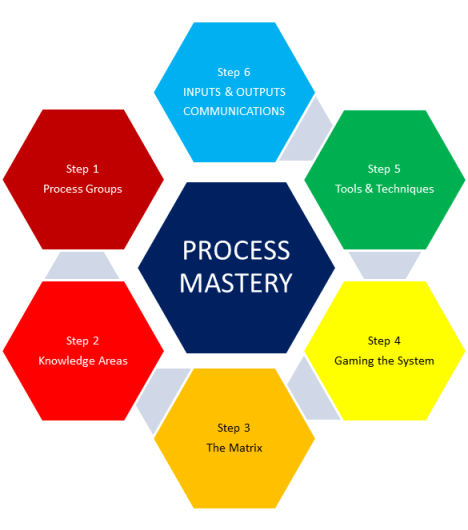
5th Edition PMBOK® Guide–Step 6: Memorizing Inputs & Outputs (Communications Management Part 1)


1. Introduction

In this next series of posts on memorizing the processes, we move on to the final step 6, which is memorizing the INPUTS & OUTPUTS associated with each of the 47 processes.   In order to breakdown the memorization into more bite-size chunks, I am breaking down the processes in the 10 knowledge areas into 2 or 3 posts each.

This post covers chapter 10 of the PMBOK® Guide, which covers the Communications Knowledge Area. This knowledge area contains 3 processes, one of which is in the Planning Process Group, the second of which is in the Executing Process Group, and the last of which is in the Monitoring & Controlling Group.

I am splitting the discussion of the Inputs & Outputs into two different posts, the first covering the first two processes, and the second one covering the last of the three processes.   This post will cover Processes 10.1 Plan Communications Management and 10.2 Manage Communications.

2. Review of processes 10.1 and 10.2 together with ITTOs (Inputs, Tools & Techniques, Outputs)

Process 10.1 Plan Communications Management

Process 10.2 Manage Communications

Process Name Tools & Techniques Inputs Outputs
10.1 Plan Communications Management 1. Communications requirements analysis

2. Communication technology

3. Communication models

4. Communication methods

5. Meetings

1. Project Management Plan

2. Stakeholder Register

3. EEFs

4. OPAs

1. Communications management plan

2. Project documents updates

10.2 Manage Communications 1. Communication technology

2. Communication models

3. Communication methods

4. Information management systems

5. Performance reporting

1. Communications management plan

2. Work performance reports

3. EEFs

4. OPAs

1. Project communications

2. Project management plan updates

3. Project documents updates

4. OPAs updates

3.  Outputs of processes 10.1 Plan Communications Management and 10.2 Manage Communications

4.  Inputs of processes 10.1 Plan Communications Management and 10.2 Manage Communications


5th Edition PMBOK® Guide–Step 6: Memorizing Inputs & Outputs (HR Management Part 2)


1. Introduction

In this next series of posts on memorizing the processes, we move on to the final step 6, which is memorizing the INPUTS & OUTPUTS associated with each of the 47 processes.   In order to breakdown the memorization into more bite-size chunks, I am breaking down the processes in the 10 knowledge areas into 2 or 3 posts each.

This post covers chapter 9 of the PMBOK® Guide, which covers the Human Resource (HR) Knowledge Area. This knowledge area contains 4 processes, one of which is in the Planning Process Group, and the last three of which are in the Executing Process Group.   Alone of all the knowledge areas, HR is the only one NOT to have a process in the Monitoring & Controlling Group.

I am splitting the discussion of the Inputs & Outputs into two different posts, each one covering two of the processes.   This post will cover Processes 9.3 Develop Project Team and 9.4 Manage Project Team.

2.  Review of processes 9.3 and 9. 4 together with ITTOs (Inputs, Tools & Techniques, Outputs)

Process 9.3 Develop Project Team

Process 9.4 Manage Project Team

Process Name Tools & Techniques Inputs Outputs
9.3 Develop Project Team 1. Interpersonal skills

2. Training

3. Team-building activities

4. Ground rules

5. Colocation

6. Recognition and awards

7. Personnel assessment tools

1. Human resource management plan

2. Project staff assignments

3. Resource calendars

1. Team performance assessments

2. EEFs updates

9.4 Manage Project Team 1. Observation and conversation

2. Project performance appraisals

3. Conflict management

4. Interpersonal skills

1. Human resource management plan

2. Project staff assignments

3. Team performance assessments

4. Issue log

5. Work performance reports

6. OPAs

1. Change requests

2. Project management plan updates

3. Project documents updates

4. EEFs updates

5. OPAs updates

3.   Outputs of processes 9.3 Develop Project Team and 9.4 Manage Project Team

TO BE COMPLETED LATER TODAY

a. Team performance assessments (9.3 Develop Project Team)

b. EEFs updates (9.3 Develop Project Team)

c. Change requests (9.4 Manage Project Team)

d. Project management plan updates  (9.4 Manage Project Team)

e. Project documents updates  (9.4 Manage Project Team)

f. EEFs updates  (9.4 Manage Project Team)

g. OPAs updates  (9.4 Manage Project Team)

4.  Inputs of processes 9.3  Develop Project Team and 9.4 Manage Project Team

a. Human resource management plan (9.3 Develop Project Team)

b. Project staff assignments  (9.3 Develop Project Team)

c. Resource calendars  (9.3 Develop Project Team)

d. Human resource management plan (9.4 Manage Project Team)

e. Project staff assignments (9.4 Manage Project Team)

f. Team performance assessments (9.4 Manage Project Team)

g. Issue log (9.4 Manage Project Team)

h. Work performance reports (9.4 Manage Project Team)

i. OPAs (9.4 Manage Project Team)

5th Edition PMBOK® Guide–Step 6: Memorizing Inputs & Outputs (HR Management Part 1)


1. Introduction

In this next series of posts on memorizing the processes, we move on to the final step 6, which is memorizing the INPUTS & OUTPUTS associated with each of the 47 processes.   In order to breakdown the memorization into more bite-size chunks, I am breaking down the processes in the 10 knowledge areas into 2 or 3 posts each.

This post covers chapter 9 of the PMBOK® Guide, which covers the Human Resource (HR) Knowledge Area. This knowledge area contains 4 processes, one of which is in the Planning Process Group, and the last three of which are in the Executing Process Group.   Alone of all the knowledge areas, HR is the only one NOT to have a process in the Monitoring & Controlling Group.

I am splitting the discussion of the Inputs & Outputs into two different posts, each one covering two of the processes.   This post will cover Processes 9.1 Plan Human Resource Management and 9.2 Acquire Project Team.

2.  Review of processes 9.1 and 9.2 together with ITTOs (Inputs, Tools & Techniques, Outputs)

Process 9.1 Plan Human Resource Management creates the plan that is the framework for all the other processes done in the Executing Progress group.   It identifies and documents

  • project roles and responsibilities
  • required skills
  • reporting relationships

and creates a staffing management plan.

Process 9.2 Acquire Project Team confirms the availability of human resources and obtains the team necessary to complete the project activities.

Process Name Tools & Techniques Inputs Outputs
9.1 Plan Human Resource Management 1. Organizational charts and position descriptions

2. Networking

3. Organizational theory

4. Expert judgment

5. Meetings

1. Project management plan

2. Activity resource requirements

3. EEFs

4. OPAs

1. Human Resource Management Plan
9.2 Acquire Project Team 1. Pre-assignment

2. Negotiation

3. Acquisition

4. Virtual teams

5. Multi-criteria decision analysis

1. Human Resource Management Plan

2. EEFs

3. OPAs

1. Project staff assignments

2. Resource calendars

3. Project management plan updates

3.  Outputs of process 9.1 Plan Human Resource Management and 9.2 Acquire Project Team

a.  Human Resource Management Plan (9.1 Plan Human Resource Management)

The process 9.1 Plan Human Resource Management has as its main output the Human Resource Management Plan, the main elements of which are:

  • Roles and responsibilities (includes the project role, authority level, responsibility, and competency)
  • Project organization charts (display of project team members and their reporting relationships)
  • Staffing management plan (describes when and how project team members will be acquired and for how long they will be needed on the project)

The last item on the list, staffing management plan, itself consists of several elements, including:

  • Staff acquisition (will the project team members come from within the organization or from external, contracted sources)
  • Resource calendars (identifies the working days and shifts on which each specific resource is available)
  • Staff release plan (determines the method and timing of releasing team members)
  • Training needs (if team members assigned to the project do not have the required competencies, a training plan can be developed as part of the project)
  • Recognition and rewards (contains clear criteria for rewards and a planned system for their use, based on activities and performance)
  • Compliance (strategies for complying with applicable government regulations, union contracts, and other established HR policies)
  • Safety (policies and procedures that protect team members from safety hazards)

b. Project staff assignments (9.2 Acquire Project Team)

This is the list of appropriate people assigned to the project team.

c. Resource calendars (9.2 Acquire Project Team)

Documents the time periods that each project team member is available to work on the project.

d. Project management plan updates (9.2 Acquire Project Team)

The human resource management plan and its subsidiary components, in particular the project organization chart and the staffing management plan, may be updated as a result of this process.

4.  Inputs of process 9.1 Plan Human Resource Management and 9.2 Acquire Project Team

a. Project management plan (9.2 Acquire Project Team)

The information needed from the other parts of the Project Management Plan in order to develop the Human Resource Plan includes the following:

  • Project life cycle and the processes that will be applied to each phase
  • How work will be executed to accomplish the project objectives
  • Change management plan that documents how changes will be monitored and controlled
  • Configuration management plan that documents how configuration management will be performed in order to make sure that the project team is working on the correct version of the project plan
  • How integrity of the project baselines (scope, schedule, and cost baselines) will be maintained
  • Needs and methods of communication among stakeholders

b. Activity resource requirements (9.2 Acquire Project Team)

The activity resource requirements help determine the human resource needs for the project.

c. EEFs (9.1 Plan Human Resource Management and 9.2 Acquire Project Team)

The EEFs used in process 9.1 Plan Human Resource Management are

  • Organizational culture and structure (functional, projectized, or matrix)
  • Existing human resources within the organization
  • Geographical dispersion of team members
  • Personnel administration policies
  • Marketplace conditions

The EEFs used in process 9.2 Acquire Project Team are

  • Existing information on human resources (availability, competency levels, prior experience, cost rate)
  • Personnel administration policies such as those that affect outsourcing
  • Organizational structure (functional, projectized, or matrix)
  • Colocation or multiple locations

d. OPAs ((9.1 Plan Human Resource Management and 9.2 Acquire Project Team)

The OPAs used in process 9.1 Plan Human Resource Management and 9.2 Acquire Project Team are

  • Organizational standard processes, policies, and role descriptions
  • Templates for organizational charts and position descriptions
  • Lessons learned on organizational structures that have worked in previous projects
  • Escalation procedures for handling issues within the team and within the performing organization

e.  Human Resource Management Plan (9.2 Acquire Project Team)

This output of the previous process 9.1 Plan Human Resource Management is the input of the following process 9.2 Acquire Project Team.   The most relevant elements of the HR Management Plan for this process are:

  • Roles and responsibilities (defines the positions, skills, and competencies that the project demands)
  • Project organization charts (indicates the number of people needed for the project)
  • Staffing management plans (indicates the time periods each project team member will be needed)

The next post will cover the inputs and outputs for the last two processes of the HR knowledge area, 9.3 Develop Project Team and 9.4 Manage Project Team.

Essential Integral, Lesson Three: Lines


1.   Introduction

Lines of development are capacities of the self such as cognition, emotions, morality, and faith. They are available to everyone, though each person differs in their degree of development in any given line. This lesson introduces the basic theoretical distinctions regarding lines, as well as how you can use them in analysis and how you can cultivate an awareness of each capacity.


to be continued

Iran and the West: The Outlook for Diplomacy–an EIU Webinar (updated)


On November 13, 2013, the Economist Intelligence Unit sponsored a webinar to discuss the negotiations underway between Iran and the Western powers regarding the future of Iran’s nuclear program.    The presenter was Edward Bell, an Economist correspondent covering Middle East and Asia.  

1.  Change in tone in Iran’s diplomatic posture

Back in July 2012 there was a real prospect of Iran blocking the Straits of Hormuz in response to economic sanctions imposed by the West.  The biggest change came as Hassan Rowhani, who campaigned as the non-hardline conservative candidate, was elected as President of Iran in June 2013.  The supreme leader Ayatollah Ali Khamenei has encouraged Mr. Rowhani to be flexible in his dealing with the West.  Khamenei’s backing has helped to quiet conservative forces at home in Iran during the negotiations.

Rowhani has appointed senior cabinet members with experience in dealing with west.  For example,

  •  Mohammad Javad Zarif, an Iranian diplomat and politician is the current minister of foreign affairs in the Rouhani administration.
  • Ali Akbar Salehi is an Iranian academic who is a graduate of MIT who has been made the head of the Atomic Energy Agency.
  • Bijan Namdar-Zanganeh is the Minister of Petroleum.

The biggest affect on negotiations has been that the negotiators have the full backing of the government.  As opposed to previous negotiations, where any proposal made to the Iranian negotiators would have to be taken back to Iran for discussion within the government, the current negotiators are able to make decisions on behalf of the government, which has meant more rapid progress in the negotiation process.

2.  Recent negotiations

  • In the first round in October, Iran proposes its “end game” for its nuclear capacity.  Both Iran and Western powers reported constructive discussion but no deal was made.
  • Second session in November was attended by US Secretary of State John Kerry.  The reports by the media were that a deal was close, but confusing reports emerged, first blaming the outcome on the French for halting development of Iran’s heavy water reactor.  Then the US blamed the Iranians.
  • However, the Iran and the IAEA issued a joint statement, with Tehran pledging greater transparency, which was joined in by other foreign ministers from Russia and China, and this led to a third round of talks scheduled for the weekend of November 23rd.

Update:   On the weekend of November 23rd, 2013, a tentative agreement was reached between the Western powers and Iran.   The New York Times has put together a graphic which outlines the details of the agreement.

http://www.nytimes.com/interactive/2013/11/24/world/middleeast/Understanding-the-Deal-With-Iran.html?hp&_r=0

The most important feature of the agreement is that allows enrichment up to 5%, but the current stockpile of uranium enriched to 20% must be diluted.    In exchange, the US will relieve $6-$7 billion in sanctions, $4.2 billion of which is oil revenue frozen in foreign banks.    This is not a “grand bargain resolution”, but a short-term deal that will build trust between both sides.  

Such a trust-building measure is sorely needed, because the Iran and the US have little track record of trust building in the past few decades.  However, Iran has a strategic interest in ensuring the success of the negotiations in that it wants to maintain the right to enrich uranium to provide fuel for a nuclear-power program.

On the West, there is dispute between the Western powers.  Israel will strongly opposed ANY nuclear program.  The French are not opposed to any nuclear power program, but they oppose the heavy water reactor now being build in Arak because of its potential to create plutonium-based weapons. 

3.  Iran-IAEA Joint Statement

After the second round of negotiations, the joint announcement between Iran and the IAEA, UN’s nuclear watchdog, is that IAEA has pledged to protect Iranian security concerns, so that sensitive information is not passed to foreign powers; in exchange, Iran would allow greater transparency, in particular with respect to on-site inspections.

4.  Potential Interim Deal

There could be an easing of sanctions on Iran’s economy.  Iran wants to enrich its uranium to the level of 19.5%, close to the 20% “weapons-usable” threshold.  Perhaps an agreement that would limit Iran to enrichment to 5%, or allow the outsourcing of enrichment, might be a deal that would allow the Iranians the “win” of being able to keep its uranium enrichment program, while at the same time calming some of the fears of Western powers of its ability to convert its nuclear-power program to a nuclear-weapons program.

5.  Regional Winners and Losers

What powers would be the winners if the Iranian nuclear talks reached fruition, and the economic sanctions were lifted?

  • Syria—Iran’s influence couldn’t be ignored in negotiations with the Assad regime
  • Turkey—could reignite its trade with Iran, which has resisted US and EU sanctions on Iran and has only complied under pressure (trade has been down 40% year-on-year in the first eight months of 2013)

What powers would be the losers?

  •  Most obvious loser would be Israel, which has remained steadfast in opposition to any deal with lifts sanctions.  The above-ground heavy water reactor facilities in Arak are most vulnerable to potential Israeli attack.
  • Saudi Arabia would no longer have a weakened adversary in the Middle East “Cold War”, and its Sunni clients would face opposition from Shia militant groups in the region such as Hezbollah.  It would also face increasing competition within OPEC because of increase production of crude oil (see section 6 on Economic Impact of Sanctions).

6.  Economic Impact of Sanctions

The sanctions have caused the economy to shrink, and it will not go back to pre-sanction levels (2011) until 2018.  But if the sanctions are lifted, non-oil exports could be carried out more easily, and this would improve Iran’s foreign currency levels.  The highest profile impact of the sanctions has been the reduction in the production of crude oil.  Back in 2007, Iran was producing 4 million barrels per day, and now it is only producing close to 2.5 million barrels per day.  This means that exports have been cut almost in half, although exports have been rising slowly as Asian economies that deal with Iran find ways to deal in their own currency.  For example, India is paying for oil with rupees.  China is paying for its oil is investing in Iranian petrochemicals in order to get around sanctions.  If sanctions are removed, the oil production could go from its current 2.5 mb/d to 3.5 mb/d by 2018.

There increase in production would lead to tensions in OPEC, which is currently dealing with the increasing production coming from Iraq.  Saudi Arabia is hoping that Iran’s oil production is also curtailed by the continuance of economic sanctions. 

One of the segments most effected by the imposition of sanctions is the currency.  The rial has been devalued twice since sanctions started.  Exchange rate was 12,000 rial to the dollar in 2012, and it is now at 25,000 to the dollar.  Central bank has the ability to maintain the rial at this level for quite some time.  Iran exports a lot besides crude oil.  Weakness of rial makes the non-oil exports more attractive in comparison.  The consumer prices have gone down.  The current 40% inflation will come down as the monetary authorities try to slow the growth in liquidity, and it will end up at 10% by 2018. 

Its market size and relative isolation still makes Iran attractive.  Iran is a solidly middle-class country, with an educated population which is well aware of international trends.  A lot of investment in infrastructure could be lucrative.

Looking outside of Iran, how could a breakthrough in nuclear negotiations impact oil prices?  An ease of tension would help remove the “political risk premium”, which was at evidence last year when there was a potential threat by Iran of a blockade of the Straits of Hormuz in retaliation for a threatened strike by Israel on its nuclear facilities. 

There has been a concern over how well Iranian oil production capacity was shut in by the sanctions.  Iran was holding a lot of its production was in floating storage, and able to maintain stable production levels for a while.  It has since had to shut down production.  If the shut down was done in a relatively clear-cut and professional way, Iran’s production could increase its production smoothly and rapidly if sanctions are lifted.

Oil sanctions have been particularly effective, one of West’s “trump cards.”   Iran hinging its future on gas exports, but it will take time to negotiate deals.   Gas exports are not subject to the same sanctions as oil exports, but Iran is not carrying out a lot of action here except for some deals with Oman.

7.  Questions & Answers

What are the prospects for division within Iran’s leadership on nuclear issue?

This characteristic had effected the relations between Ahmadinejad and Iranian clerics.  The interaction between President Roumani and the Ayatollah Khamenei are more united.  The Iranians don’t have to go back to Tehran to see what they are willing to negotiate at the table, for example. 

What are the regional political implications if Iran’s oil production rises dramatically? 

The effects would not occur in 2014 or 2015, but in the medium term, from 2016-2018.  It would intensify the Iranian-Saudi Arabian “cold war”.  If Iranians could increase oil production from 2.5 to 3.5 mb/d, it would be a significant improvement for them.  It much of this oil were being exported out of the country, the Iranian crude oil would be a viable alternative to Saudi crude oil, and it would set off tension within OPECs.  90 to 100/$ per day is the price which most governments are basing budget forecasts on.

If a nuclear deal is made, infrastructure investment opportunities are significant.  BP estimates that Iran has the world’s largest gas reserves which are not being used at capacity.  Turkey and a few former Soviet republics are places that Iran sells gas to.  If Iran developed LNG capacity, it would increase its export ability.  Patents by US companies would have to be used which would cause delays. 

If Iranians could realize real this oil/gas production potential, then exchanging the buy back system of contracts would offer more attractive terms to investors. 

If sanctions reduction would occur, how would effect Iranian investment abroad?  The Tehran stock exchange is one of best performing stock exchanges in the area because money can’t leave Iran.  The first port of call for investment from Iranians would be UAE (Dubai), other countries like Turkey, and parts of Iraq.  Oil sanctions and banking sanctions keep Iran out of international steering mechanisms.  These banking sanctions would be medium-term sanctions that would need to be relieved in the medium term.

How would the lifting of sanctions effect China and Japan which both rely on Iranian oil? 

Both China and Japan have maintained relations with Tehran.  They have an interest in maintaining good commercial relations with Tehran based on oil trade.  Both China and Japan have infrastructure in place to handle Iranian oil.  They have not put diplomatic pressure on France and US, however.  There is a solid Asian bias in Iranian trade, as China, Japan, India are main consumers of its petroleum products.

How would the lifting of sanctions effect Saudi Arabia?

If Iranian oil could come back out of the country, SA could maintain oil price by cutting down production.  Now that are pumping out as much as they can; if they had to cut down production, it would negatively impact their economy.  In terms of political status in region, if Iran were to engage in short-term negotiations over what’s going on Syria, you could have amplifications of tension in Iraq and Syria because of the “proxy war”.  However, Iran has been moderate in these negotiations.

What do you consider to be the greatest challenge towards potential agreement?

The biggest challenge is the West coming to grips with a nuclear Iran, that is an Iran having nuclear power but not nuclear arms.  Iran having a nuclear capacity that can be contained is something that US has to come to terms with.

More regionally, the biggest factor is there is not going to be any decrease in rhetoric from Israel.  That linkage is going to make it hard for Iranians to believe that threat of military force is gone.

5th Edition PMBOK® Guide–Step 6: Memorizing Inputs & Outputs (Quality Management Part 3)


1. Introduction

In this next series of posts on memorizing the processes, we move on to the final step 6, which is memorizing the INPUTS & OUTPUTS associated with each of the 47 processes.   In order to breakdown the memorization into more bite-size chunks, I am breaking down the processes in the 10 knowledge areas into 2 or 3 posts each.

This post covers chapter 8 of the PMBOK® Guide, which covers the Quality Knowledge Area. This knowledge area contains 3 processes, one of which is in the Planning Process Group, one of which is in the Executing Process Group and the last of which is in the Monitoring & Controlling Process Group.

(I am splitting the discussion of the Inputs & Outputs into three different posts, each one covering one of the processes.   This post will cover Processes 8.3 Control Quality).

2.   Review of process 8.3 Control Quality

As a reminder, Control Quality  is the process of monitoring and recording results of executing the quality activities to assess performance and recommend necessary changes.   The difference between Quality Assurance and Quality Control is that Quality Assurance is designed to improve the quality of processes, whereas Quality Control is designed to improve the quality of the deliverables themselves.

Process Name Tools & Techniques Inputs Outputs
8.3 Control Quality 1. Seven basic quality tools

2. Statistical sampling

3. Inspection

4. Approved change requests review

1. Project management plan

2. Quality metrics

3. Quality checklists

4. Work performance data

5. Approved change requests

6. Deliverables

7. Project documents

8. OPAs

1. Quality control measurements

2. Validated changes

3. Verified deliverables

4. Work performance information

5. Change requests

6. Project management plan updates

7. Project documents updates

8. OPAs updates

3.  Outputs of process 8.3

a. Quality control measurements

These are the documented results of control quality activities.

b. Validated changes

Any changes that have approved must be validated to make sure they are implemented.   Note that the explanation in the PMBOK guide is incorrect and refers instead to validated deliverables (see paragraph below).

c. Verified deliverables

This process determines the correctness of deliverables.   These deliverables that have been internally verified in the Control Quality Process are then sent to the process 5.5 Validate Scope where they are validated by the customer and/or sponsor.

d. Work performance information

Work performance data is analyzed in context and integrated across knowledge areas so that it is useful for stakeholders.

e. Change requests

A change request may include defect repair, corrective action or preventive action and are analyzed and processes in the process 4.5 Perform Integrated Change Control.

f. Project management plan updates

Both the following subsidiary management plans may be updated as a result of this process:

  • Quality Management Plan
  • Process Improvement Plan

g. Project documents updates

The project documents that may be updated include:

  • Quality standards
  • Agreements
  • Quality audit reports and change logs
  • Training plans and assessments of effectiveness
  • Process documentation, such as information obtained using the seven basic quality tools or the quality management tools

h. OPAs updates

  • Completed quality checklists
  • Lessons learned documentation

4.  Inputs of process 8.3

a. Project management plan

In particular, the quality management plan is used to control quality, as it describes how quality control will be performed within the project.

b. Quality metrics

Describes a project or product attribute and how it will be measured.

c. Quality checklists

These are structured lists that help to verify that the work of the project and its deliverables fulfill a set of requirements.

d. Work performance data

This can include planned vs. actual

  • technical performance
  • cost performance
  • schedule performance

e. Approved change requests

A change log update indicates that some changes are approved and some are not.   The implementation of approved change requests must be verified.

f. Deliverables

A deliverable is any unique and verifiable product, result, or capability that results in a validated deliverable required by the project.

g. Project documents

The project documents that may be used in the course of this process are:

  • Agreements
  • Quality audit reports and change logs supported with corrective action plans
  • Training plans and assessments of effectiveness
  • Process documentation such as those obtained using either the seven basic quality tools or the quality management and control tools (listed in the chart above as some of the tools & techniques used in this process)

h. OPAs

The OPAs that may influence this process are:

  • Organization’s quality standards and policies
  • Standard work guidelines
  • Issue and defect reporting procedures and communication policies

5th Edition PMBOK® Guide–Step 6: Memorizing Inputs & Outputs (Quality Management Part 2)


1. Introduction

In this next series of posts on memorizing the processes, we move on to the final step 6, which is memorizing the INPUTS & OUTPUTS associated with each of the 47 processes.   In order to breakdown the memorization into more bite-size chunks, I am breaking down the processes in the 10 knowledge areas into 2 or 3 posts each.

This post covers chapter 8 of the PMBOK® Guide, which covers the Quality Knowledge Area. This knowledge area contains 3 processes, one of which is in the Planning Process Group, one of which is in the Executing Process Group and the last of which is in the Monitoring & Controlling Process Group.

(I am splitting the discussion of the Inputs & Outputs into three different posts, each one covering one of the processes.   This post will cover Processes 8.2 Perform Quality Assurance).

2.   Review of process 8.2 Perform Quality Assurance

As a reminder, Perform Quality Assurance is the process of auditing the quality requirements and the results from quality measurements to ensure that appropriate quality standards and operational definitions are used.    The difference between Quality Assurance and Quality Control is that Quality Assurance is designed to improve the quality of processes, whereas Quality Control is designed to improve the quality of the deliverables themselves.

Process Name Tools & Techniques Inputs Outputs
8.2 Perform Quality Assurance 1. Quality management and control tools2. Quality audits

3. Process analysis

1. Quality management plan2. Process improvement plan

3. Quality metrics

4. Quality control measurements

5. Project documents

1. Change requests2. Project management plan updates

3. Project documents updates

4. OPAs updates

3.  Outputs of process 8.2

a. Change requests

What happens if the audit of the quality processes shows that improvements need to be made in order to make them conform to the organization’s standards?   That is when change requests are suggested, which are then analyzed in the process 4.5 Perform Integrated Change Control.

b. Project management plan updates

The subsidiary management plans that may be updated as a result of this process are:

  • Quality management plan
  • Scope management plan
  • Schedule management plan
  • Cost management plan

c.  Project documents updates

The project documents that may be updated as a result of this process are:

  • Quality audit reports
  • Training plans (for quality processes)
  • Process documentation

d. OPAs updates

  • Organization’s quality standards
  • Quality management system

4.  Inputs of process 8.3

a. Quality management plan

This describes the quality assurance and continuous process improvement approaches for the project.

b. Process improvement plan

The project’s quality assurance activities should be supportive of and consistent with the performing organization’s process improvement plans.

c. Quality metrics

The quality metrics provide the attributes that should be measured and the allowable variations.

d. Quality control measurements

The quality control measurements are the results of the control quality activities.    They are used to analyze and evaluate the quality of the processes of the project against the standards of the performing organization.

e. Project documents

Project documents should be monitored within the context of a system of configuration management to make sure the correct versions of the documents are consistently adhered to.

5th Edition PMBOK® Guide–Step 6: Memorizing Inputs & Outputs (Quality Management Part 1)


1. Introduction

In this next series of posts on memorizing the processes, we move on to the final step 6, which is memorizing the INPUTS & OUTPUTS associated with each of the 47 processes.   In order to breakdown the memorization into more bite-size chunks, I am breaking down the processes in the 10 knowledge areas into 2 or 3 posts each.

This post covers chapter 8 of the PMBOK® Guide, which covers the Quality Knowledge Area. This knowledge area contains 3 processes, one of which is in the Planning Process Group, one of which is in the Executing Process Group and the last of which is in the Monitoring & Controlling Process Group.

(I am splitting the discussion of the Inputs & Outputs into three different posts, each one covering one of the processes.   This post will cover Processes 8.1 Plan Quality Management.)


2.   Review of process 8.1 Plan Quality Management with ITTOs

As a reminder, Plan Quality Management is the process of putting together the Quality Management Plan, which gives guidelines as to all of the other quality processes that will be done in the course of the project.

Process Name Tools & Techniques Inputs Outputs
8.1 Plan Quality Management 1. Cost-benefit analysis

2. Cost of quality

3. Seven basic quality tools

4. Benchmarking

5. Design of experiments

6. Statistical sampling

7. Additional quality planning tools

8. Meetings

1. Project management plan

2. Stakeholder register

3. Risk register

4. Requirements documentation

5. EEFs

6. OPAs

1. Quality management plan

2. Process improvement plan

3. Quality metrics

4. Quality checklists

5. Project documents updates

3.  Outputs of process 8.1

a. Quality management plan

Describes how the organization’s quality policies will be implemented on the project, and how the project management team plans to meet the quality requirements set for the project.

b. Process improvement plan

This is a subsidiary management plan that is included in the project management plan.    It contains the following elements:

  • Process boundaries (describes purpose of the process, the start and the end of the process, its inputs and outputs, the process owner, and the stakeholders of the process)
  • Process configuration (graphical depiction of processes)
  • Process metrics (control limits, allows analysis of process efficiency)
  • Targets for improved performance (guides process improvement activities)

c. Quality metrics

Describes a project or product attribute and how the quality control process will measure it, usually in terms of a measurement and a tolerance (the allowable variations to the metric).    Typical quality metrics include:   defect frequency, failure rate, on-time performance.

d. Quality checklists

Used to verify that a set of required steps has been performed.   Quality checklists should incorporate the acceptance criteria included in the scope baseline.

e. Project documents updates

These include

  • Stakeholder register
  • Responsibility assignment matrix (from Human Resources Management)
  • WBS and WBS Dictionary

4.  Inputs of process 8.1

a. Project management plan

One of the inputs to the process of 8.1 Plan Quality Management are the performance baselines for the project, namely the

  • Scope baseline (consisting of the project scope statement, the WBS, and the WBS dictionary)–product scope often contains of technical issues and other concerns that can affect quality planning; contains acceptance criteria whose definition may affect quality costs
  • Schedule baseline–documents accepted schedule performance measures, including start and finish dates
  • Cost baseline–documents the accepted time interval used to measure cost performance

b. Stakeholder register

Helps identify those stakeholders with a particular interest in or impact on quality.

c. Risk register

Contains information on threats and opportunities that may impact quality requirements.

d. Requirements documentation

Captures the requirements that the project shall meet pertaining to stakeholder expectations, both project (including product) and quality requirements.

e.  EEFs

The EEFs used as inputs to this process include:

  • Governmental agency regulations
  • Rules, standards, guidelines specific to application area
  • Working or operating conditions of the projects or its deliverables that may affect product quality
  • Cultural perceptions that may influence expectations about quality

f.   OPAs

The OPAs used as inputs to this process include:

  • Organizational quality policies, procedures, guidelines
  • Historical databases and lessons learned from previous projects

5th Edition PMBOK® Guide–Step 6: Memorizing Inputs & Outputs (Cost Management Part 2)


1. Introduction

In this next series of posts on memorizing the processes, we move on to the final step 6, which is memorizing the INPUTS & OUTPUTS associated with each of the 47 processes.   In order to breakdown the memorization into more bite-size chunks, I am breaking down the processes in the 10 knowledge areas into 2 or 3 posts each.

This post covers chapter 7 of the PMBOK® Guide, which covers the Cost Knowledge Area. This knowledge area contains 4 processes, three of which are in the Planning Process group, and the last of which is in the Monitoring & Controlling Process Group.

(I am splitting the discussion of the Inputs & Outputs into two different posts; this post will cover Processes 7.3 Determine Budget and 7.4 Control Costs.)

2.  Review of processes 7.3 and 7.4 ITTOs (Inputs, Tools & Techniques, and Outputs)

There are a total of four processes in the Cost Management Knowledge Area.   Because of the large number of inputs and outputs, I am splitting my discussion of the inputs and outputs into two different posts, each one of which will cover two of the processes.    In that way, I can describe the inputs and outputs for these processes in a little bit of detail without the post becoming too long.

Here is a chart which shows the first and second processes, 7.3 Determine Budget and 7.4 Control Costs, together with their tools & techniques (which are discussed in a previous post) and their inputs & outputs.

NOTE:  the generic inputs known as Environmental Enterprise Factors and Operational Process Assets are given by their acronyms EEFs and OPAs, respectively.

Process Name Tools & Techniques Inputs Outputs
7.3 Determine Budget 1. Cost aggregation

2. Reserve analysis

3. Expert judgment

4. Historical information

5. Funding limit reconciliation

 1. Cost management plan

2. Scope baseline

3. Activity cost estimates

4. Basis of estimates

5. Project schedule

6. Resource calendars

7. Risk register

8. Agreements

9. OPAs

1. Cost baseline

2. Project funding requirements

3. Project documents updates

7.4 Control Costs  1. Earned value management

2. Forecasting

3. To-complete performance index (TCPI)

4. Performance reviews

5. Project management software

6. Reserve analysis

1. Project management plan

2. Project funding requirements

3. Work performance data

4. OPAs

1. Work performance information

2. Cost forecasts

3. Change requests

4. Project management plan updates

5. Project documents updates

6. OPAs updates

3.  Outputs of processes 7.3 and 7.4

7.3 Determine Budget is part of the planning process group; 7.4 Control Costs is part of the monitoring & controlling process group.

a. Cost baseline (7.3 Determine Budget)

This is the main output of this process.   The cost baseline is defined as the time-phased project budget, including contingency reserves but excluding management reserves, which can be changed only through formal change control procedures and is used as a basis for comparison with actual results (hence the term “baseline”).

b. Project funding requirements (7.3 Determine Budget)

Total funding requirements and period funding requirements are derived from the cost baseline.    The total funds required are those in the cost baseline plus management reserves.

c. Project documents updates (7.3 Determine Budget, 7.4 Control Costs)

The project documents that may be updated in the process 7.3 Determine Budget  are

  • Risk register
  • Activity cost estimates
  • Project schedule

The project documents that may be updated in the process 7.4 Control Costs are

d. Work performance information (7.4 Control Costs)

Using work performance data, work performance information is calculated using the earned value management quantities such as SV, SPI, CV, CPI, TCPI, and VAC, for work packages and control accounts.

e. Cost forecasts (7.4 Control Costs)

EAC (Estimate At Completion) is determined based on a calculated value or a bottom-up estimation based on the remaining work.

f. Change requests (7.4 Control Costs)

Change requests may include corrective or preventive actions, or a change to the cost baseline itself.  These requests are processed in process 4.5 Perform Integrated Change Control

g. Project management plan updates (7.4 Control Costs)

The cost baseline and the cost management plan may be updated as a part of this process.

h. Project documents updates (7.3 Determine Budget)

These include the

  • Cost estimates
  • Basis of estimates

i. OPAs updates

These include the

  • Causes of variances
  • Corrective action or preventive action recommended, and the reasons for the recommendation
  • Financial databases
  • Lessons learned from cost control

4.  Inputs of processes 7.3 and 7.4 

a. Cost management plan (7.3 Determine Budget)

This is the output of 7.1 Plan Cost Management.   It describes how the project costs will be aggregated into the project cost estimate, the cost baseline, and the project budget.    The cost estimate is the cost of all activities, the cost baseline is the cost estimate plus contingency reserves (cost of risk responses corresponding to risks in the risk register), and the project budget is the cost baseline plus management reserves (cost of workarounds for unplanned for risks).

b. Scope baseline (7.3 Determine Budget)

Contains the three elements of

  • Project scope statement–may include funding constraints, that is, formal limitations by period for expenditure of project funds
  • WBS (Work Breakdown Structure)–provides relationship among all the project deliverables
  • WBS Dictionary–provides a description of the deliverables and a description of the work required to produce each deliverable

c. Activity cost estimates (7.3 Determine Budget)

The cost estimates of individual activities will be aggregated in the “cost aggregation” technique used in this process.

d. Basis of estimates (7.3 Determine Budget)

Specifies any basic assumptions dealing with the inclusion or exclusion or indirect or other costs in the project budget.

e. Project schedule (7.3 Determine Budget)

Includes start and finish dates for the project’s activities, milestones, work packages, and control accounts.   This is used in the “cost aggregation” technique used in this process to aggregate costs in the calendar period in which they are incurred.

f. Resource calendars (7.3 Determine Budget)

Provides information on which resources are assigned to the project and when they are assigned.

g. Risk register (7.3 Determine Budget)

Used to aggregate risk response costs to be included in the contingency reserves.

h. Agreements (7.3 Determine Budget)

Contains information on costs relating to products, services, or results that are purchased for use on the project.

i. OPAs (7.3 Determine Budget, 7.4 Control Costs)

The OPAs that are considered part of the 7.3 Determine Budget and 7.4 Control Costs processes are

  • Formal and informal policies, guidelines, and procedures related to cost budgeting
  • Cost controls
  • Monitoring and reporting methods

j. Project management plan (7.4 Control Costs)

This includes the two components

  • Cost baseline–this is what is compared to actual results to see if a change is necessary
  • Cost management plan–describes how the project costs will be managed and controlled

k. Project funding requirements (7.4 Control Costs)

Includes project expenditures plus anticipated liabilities.

l. Work performance data (7.4 Control Costs)

Includes information about project progress, and about costs which have been authorized and incurred.

5th Edition PMBOK® Guide–Step 6: Memorizing Inputs & Outputs (Cost Management Part 1)


1. Introduction

In this next series of posts on memorizing the processes, we move on to the final step 6, which is memorizing the INPUTS & OUTPUTS associated with each of the 47 processes.   In order to breakdown the memorization into more bite-size chunks, I am breaking down the processes in the 10 knowledge areas into 2 or 3 posts each.

This post covers chapter 7 of the PMBOK® Guide, which covers the Cost Knowledge Area. This knowledge area contains 4 processes, three of which are in the Planning Process group, and the last of which is in the Monitoring & Controlling Process Group.

(I am splitting the discussion of the Inputs & Outputs into two different posts; this post will cover Processes 7.1 Plan Cost Management and 7.2 Estimate Costs.)


2.  Review of processes 7.1 and 7.2 ITTOs (Inputs, Tools & Techniques, and Outputs)

There are a total of four processes in the Time Management Knowledge Area.   Because of the large number of inputs and outputs, I am splitting my discussion of the inputs and outputs into two different posts, each one of which will cover two of the processes.    In that way, I can describe the inputs and outputs for these processes in a little bit of detail without the post becoming too long.

Here is a chart which shows the first and second processes, 7.1 Plan Cost Management and 7.2 Estimate Costs, together with their tools & techniques (which are discussed in a previous post) and their inputs & outputs.

NOTE:  the generic inputs known as Environmental Enterprise Factors and Operational Process Assets are given by their acronyms EEFs and OPAs, respectively.

Process Name Tools & Techniques Inputs Outputs
7.1 Plan Cost Management 1. Expert judgment

2. Analytical techniques

3. Meetings

1. Project management plan

2. Project charter

3. EEFs

4. OPAs

1. Cost management plan
7.2 Estimate Costs 1. Expert judgment

2. Analogous estimating

3. Parametric estimating

4. Bottom-up estimating

5. Three-point estimating

6. Reserve analysis

7. Cost of quality

8. Project management software

9. Vendor bid analysis

10. Group decision-making techniques

1. Cost management plan

2. Human resource management plan

3. Scope baseline

4. Project schedule

5. Risk register

6. EEFs

7. OPAs

1. Activity cost estimates

2. Basis of estimates

3. Project documents updates

3.  Outputs of processes 7.1 and 7.2

a. Cost management plan (7.1 Plan Cost Management)

This is the main output of the Plan Cost Management process.   The cost management plan describes how the project costs will be planned, structured, and controlled, and contains the following elements:

  • Units of measure, level of precision (the degree to which activity cost estimates will be rounded up or down), level of accuracy (e.g., ±10%)
  • Organizational procedures links (control accounts, the component of the work breakdown structure of WBS used for the project cost accounting)
  • Control thresholds (specifies an agreed-upon amount of variation to be allowed before some action needs to be taken)
  • Rules of performance measurement (sets the rules for earned value measurement or EVM)
  • Reporting formats
  • Process descriptions

b. Activity cost estimates (7.2 Estimate Costs)

Quantitative assessments of the probable costs required to complete project work, including direct labor, materials, equipment, services, facilities, information technology, and special financial categories such as cost of financing and a cost contingency reserve.

c. Basis of estimates (7.2 Estimate Costs)

Additional details supporting the cost estimate.

d. Project documents updates (7.2 Estimate Costs)

Includes the risk register (with costs of risk responses to be included in contingency reserves).

4.  Inputs of processes 7.1 and 7.2

a. Project management plan (7.1 Plan Cost Management)

Contains the scope baseline and the schedule baseline, in addition to other cost-related decisions in the area of risk and communications decisions.

b.  Project charter (7.1 Plan Cost Management)

Provides the summary budget from which the detailed project costs are developed.  Defines the project approval requirements that will influence the management of the project costs.

c.  Cost management plan (7.2 Estimate Costs)

The output of the previous process, the cost management plan defines how project costs will be managed and controlled, and includes the method used and the level of accuracy required to estimate activity cost.

d.  Human resource management plan (7.2 Estimate Costs)

Provides project staffing abilities, personnel rates, and related rewards/recognition, which are necessary components for developing the project cost estimates.

e.  Scope baseline (7.2 Estimate Costs)

Comprised of the

  • Project scope statement
  • WBS
  • WBS dictionary

f.  Project schedule (7.2 Estimate Costs)

The a) type and quantity of resources and b) the amount of time which those resources are applied to complete the work of the project are major factors in determining the project cost.

g.  Risk register (7.2 Estimate Costs)

Needs to be reviewed to consider risk response costs.

h. EEFs (7.1 Plan Cost Management and 7.2 Estimate Costs)

The inputs to the 7.1 Plan Cost Management process and 7.2 Estimate Costts are:

  • Organizational culture and structure
  • Market conditions (which determine what products, services, and results are available in the regional and global market)
  • Currency exchange rates for project costs sourced from more than one country
  • Published commercial information (such as resource cost rate information)
  • Project management information system (provides alternate possibilities for managing cost)

i.  OPAs (7.1 Plan Cost Management and 7.2 Estimate Costs)

The inputs to the 7.1 Plan Cost Management process are:

  • Financial controls procedures
  • Historical information and lessons learned knowledge bases
  • Financial databases
  • Existing formal and informal cost estimating and budgeting-related policies, procedures, and guidelines.